Tag: frame head replacement
Removing The Frame Head To Prepare for New Donor Replacement
by Garage Weasel on Jun.13, 2021, under Chassis
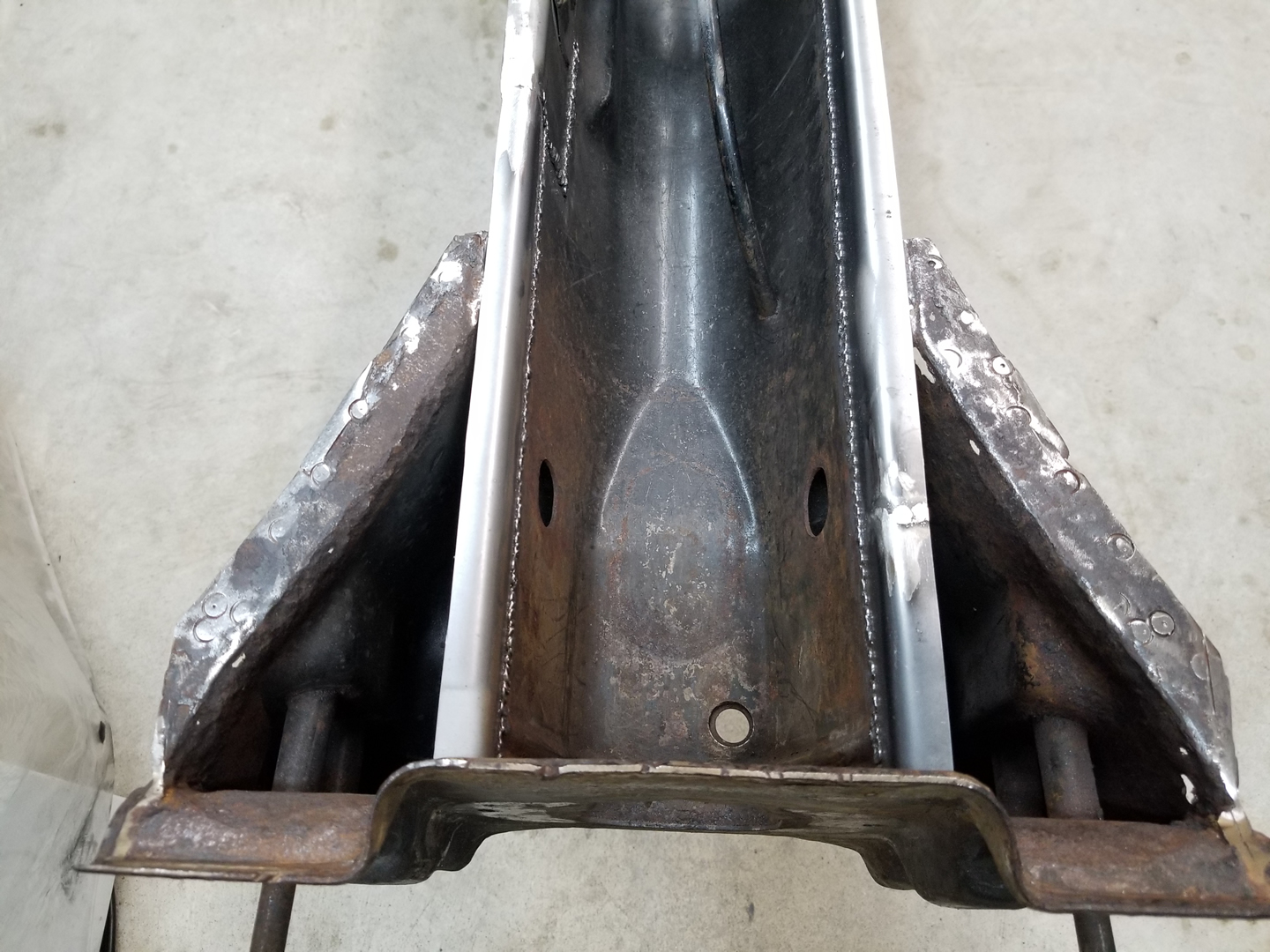
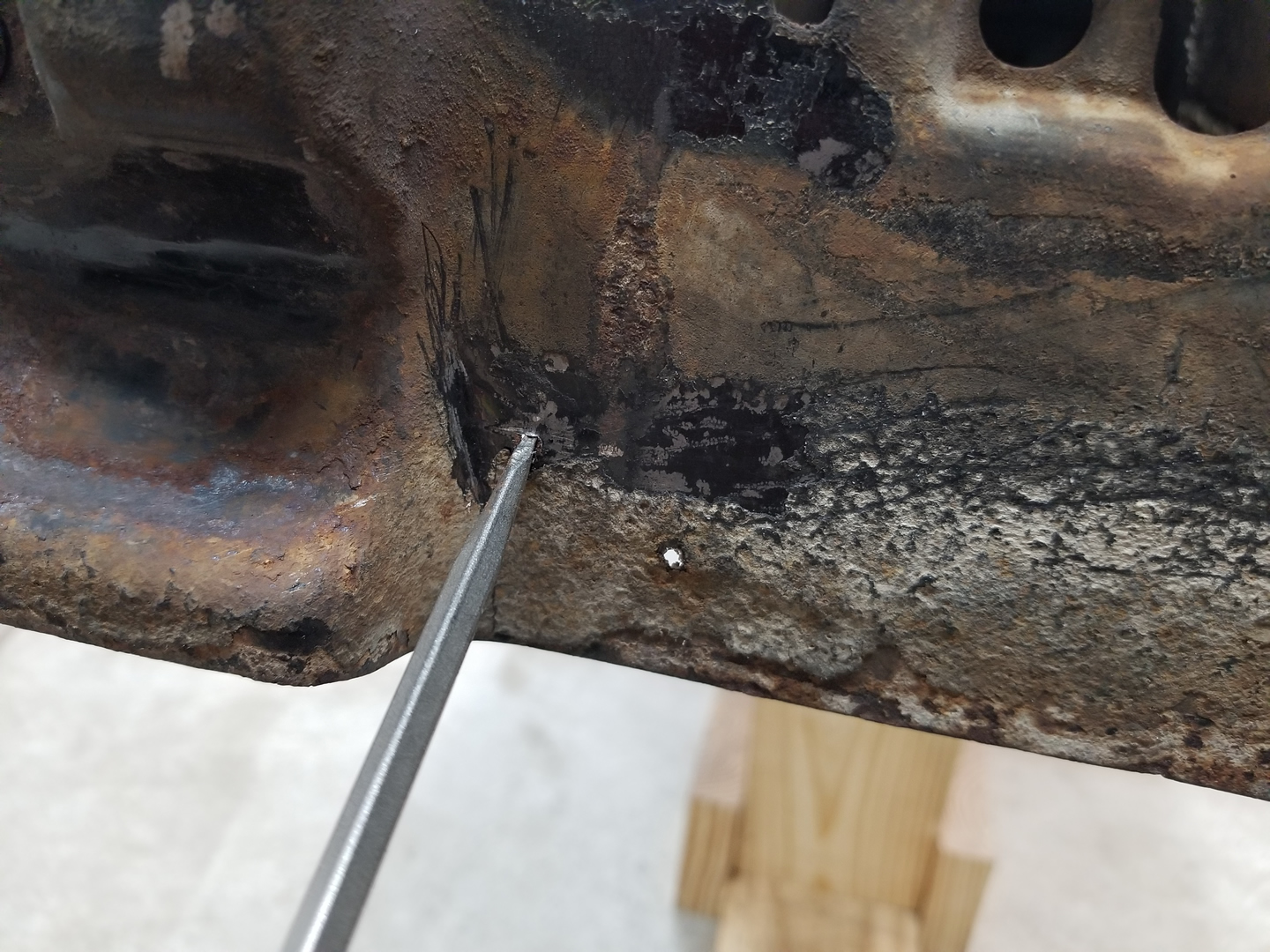
Time to remove the frame head and prepare the tunnel for the new donor frame head section. The original frame head is just too rusted on the bottom inch or so and is super thin and pitted. From the top, it doesn't look that bad. But an examination of the bottom sections shows severe rust damage. For a long time I considered just cutting out the bottom areas and welding in sections from a solid frame head, but finally realized that if I had a solid one or the relavant part of one, I should replace the bulk of it and have a stronger frame head overall. Here are examples of the rust damage:

|
|

|

|
|

|

|

|
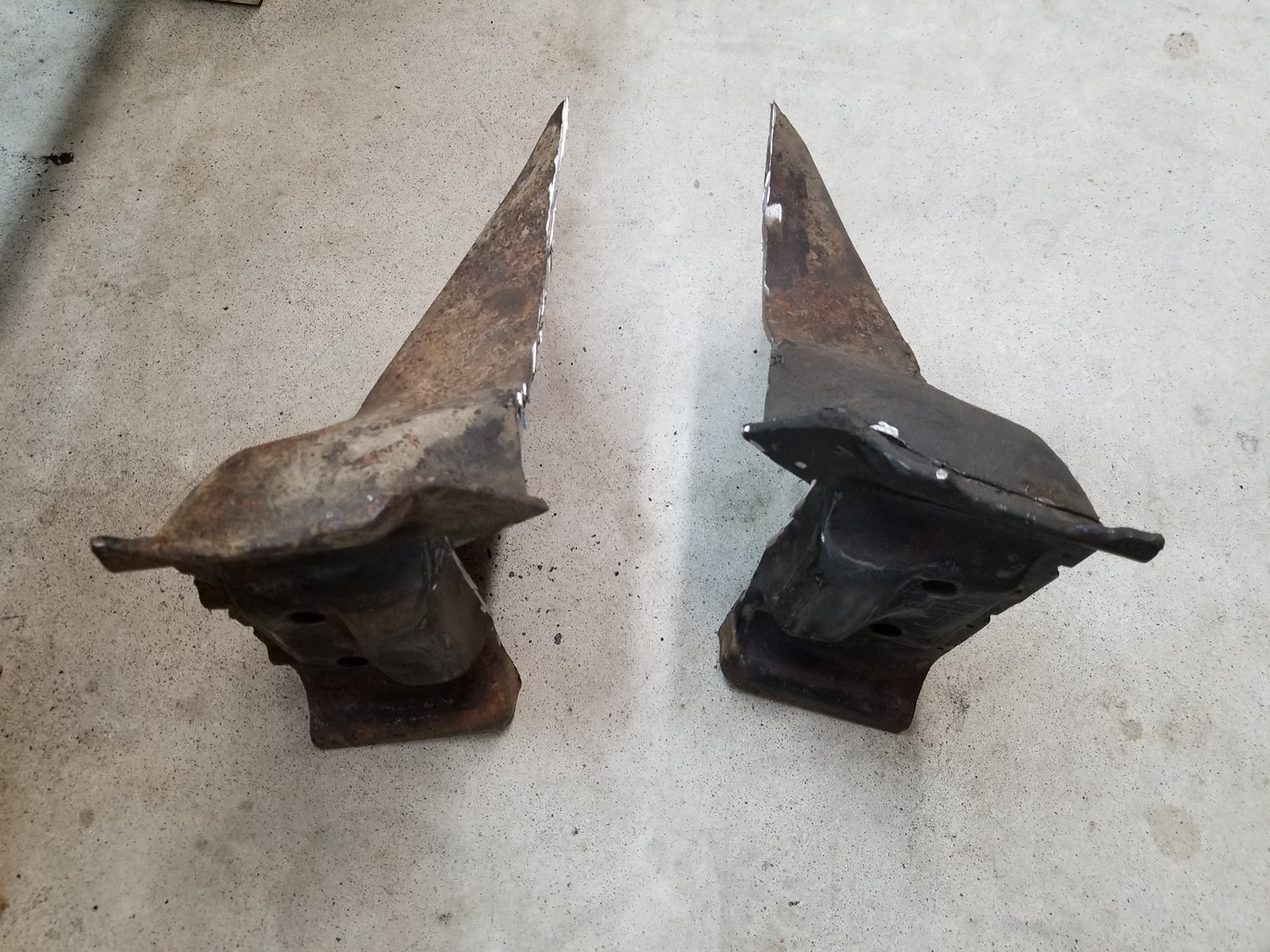
I started removing the old frame head piece by grinding down the spot welds where it wraps around the tunnel. Once the spot welds were ground down, I cut through the frame head so that I could peel the metal back and then off. I did this on both sides and then cut through the area on top of the tunnel where it was seam welded. Next, I cut through the top toward the front plate and then down through the front plate to remove the areas on the sides to expose the tunnel. Big chunks were removed this way and this just leaves the piece on the top and the middle of the front plate. I then ground through the front plate where it is welded and removed it. Lastly, I ground through the oval-shaped seam weld on the top piece and then used a spot weld cutter to remove the 5 spot welds as well. These spot welds are in an X pattern. I also included a picture of all the items removed below.

|

|
|

|

|

|

|

|

|

|

|

|

|
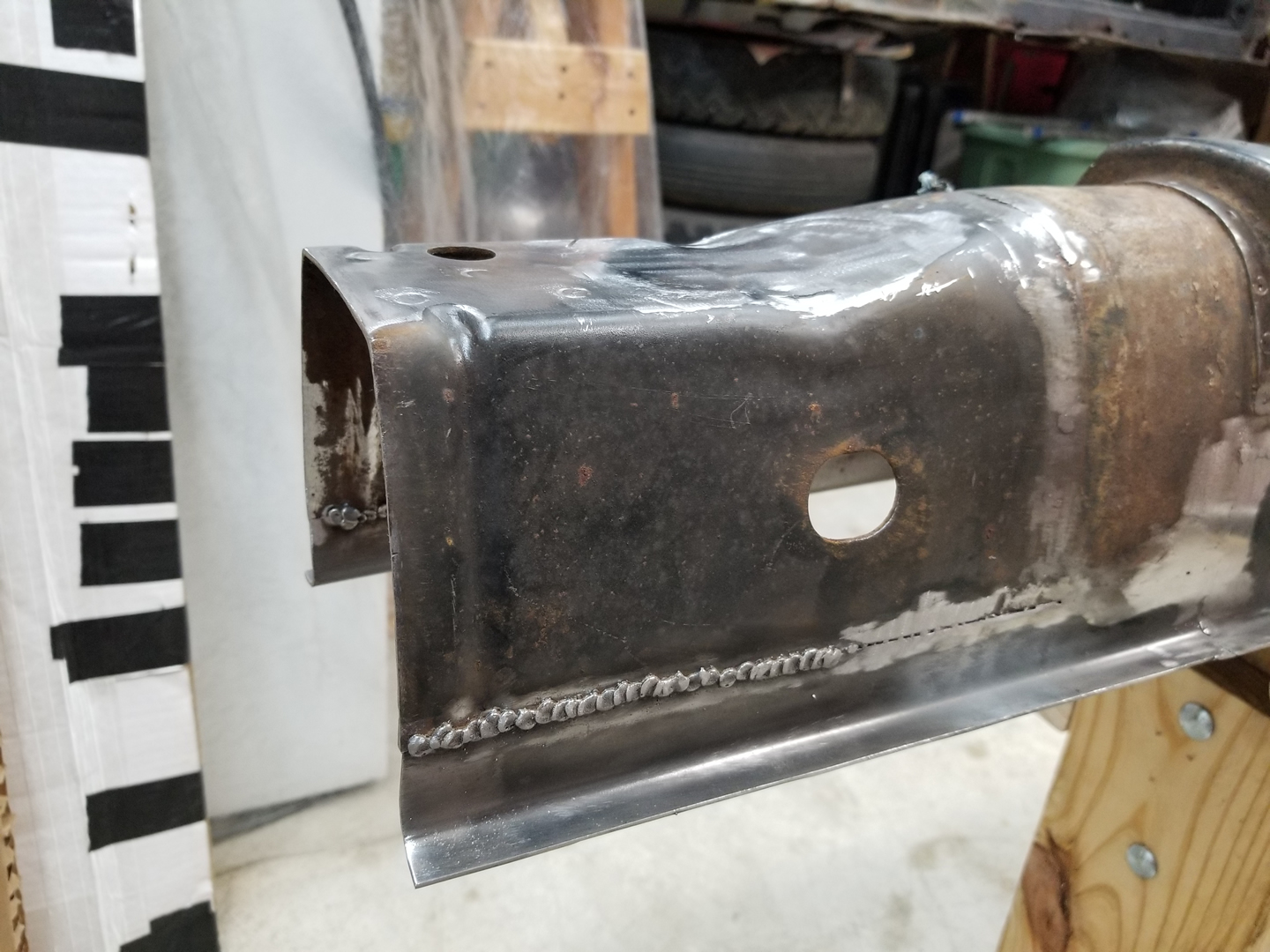
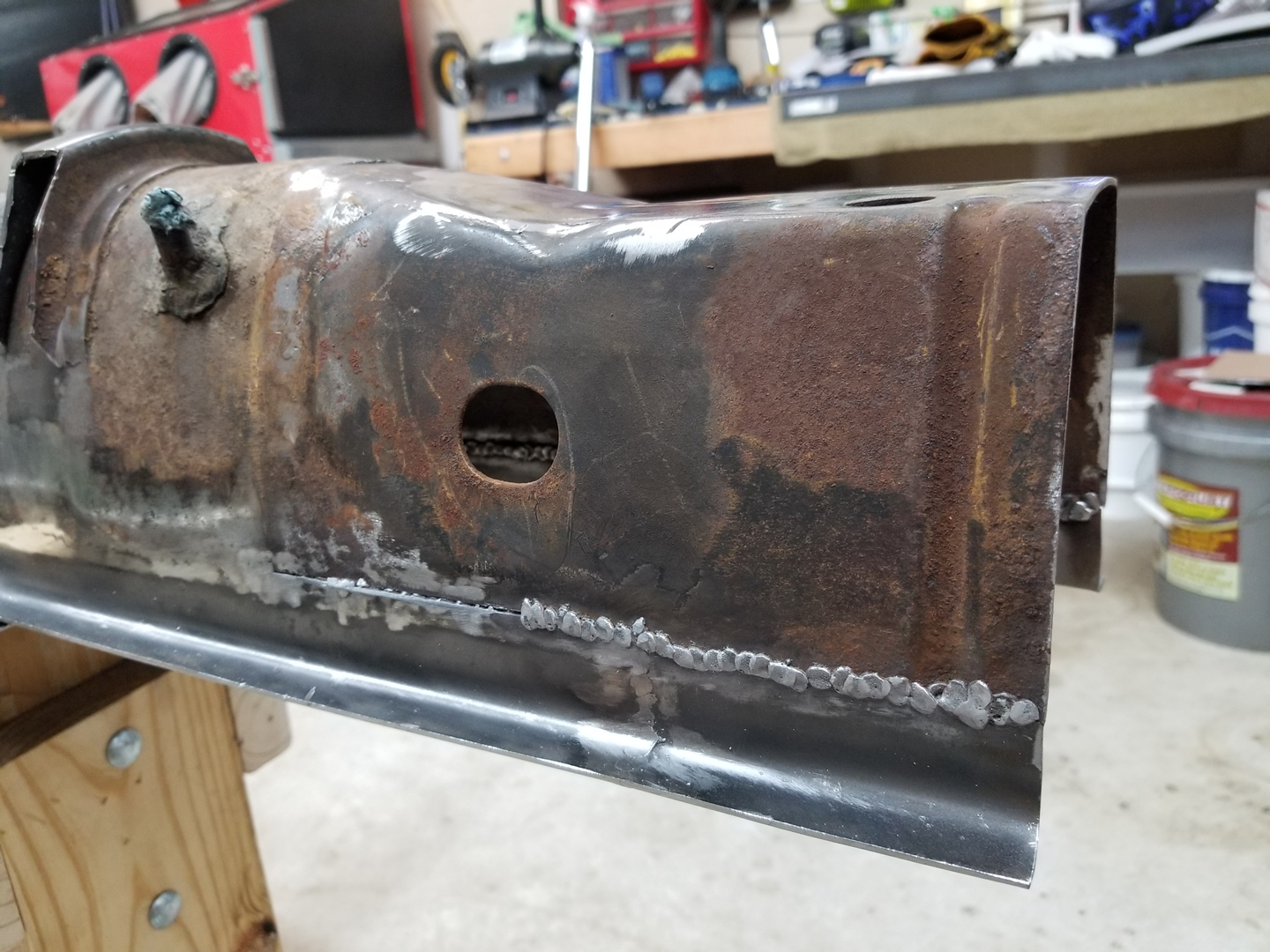
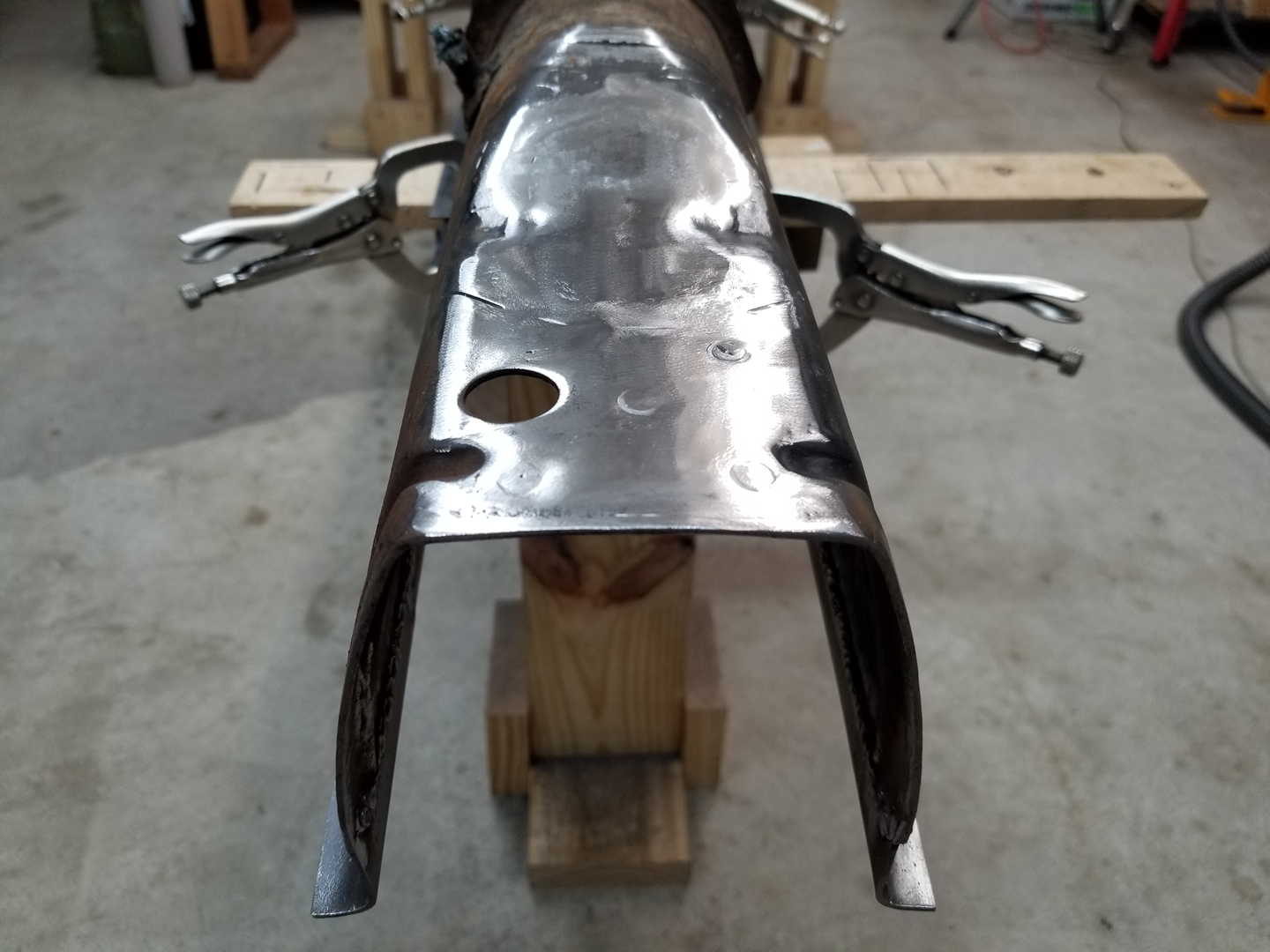
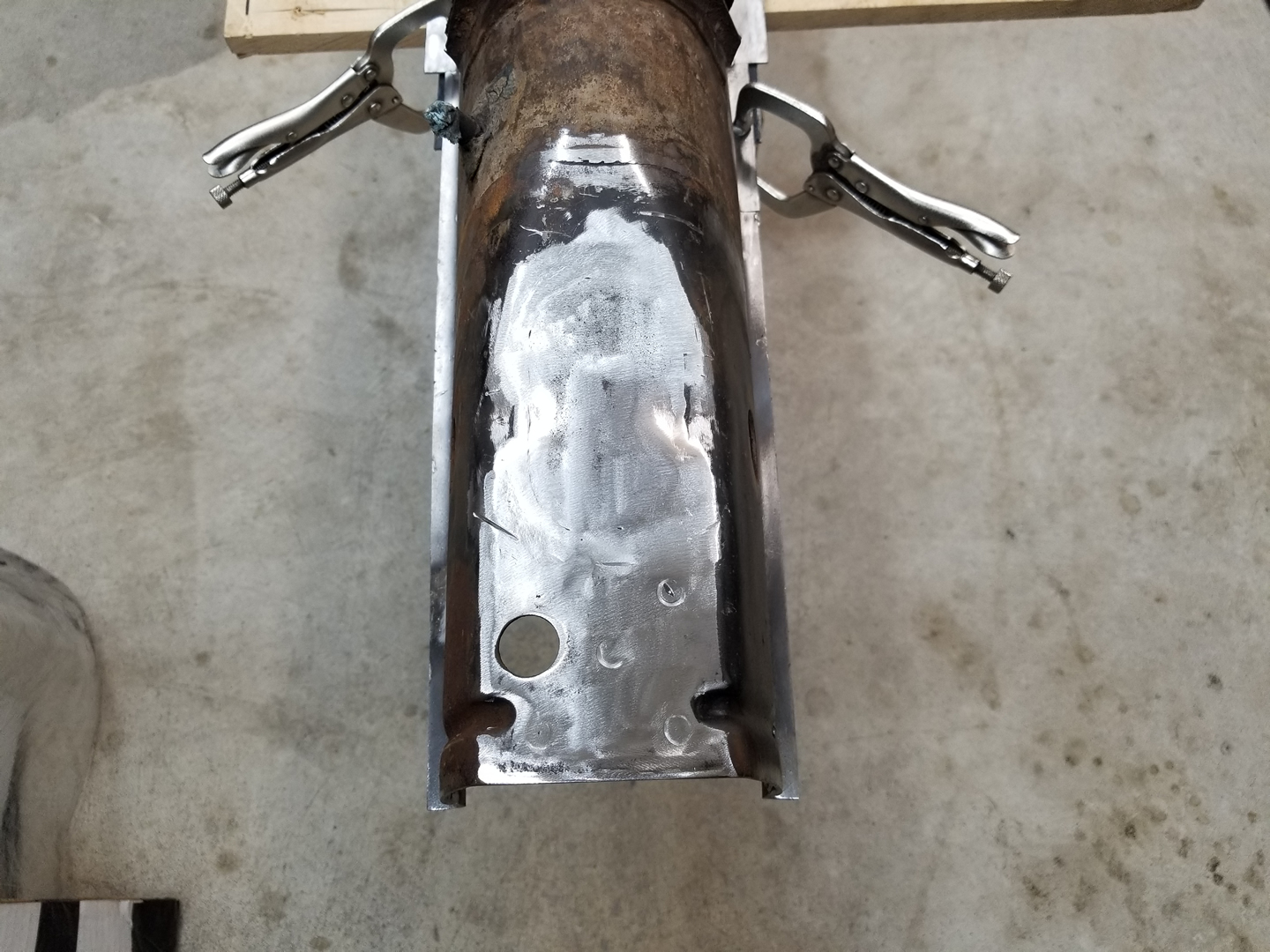
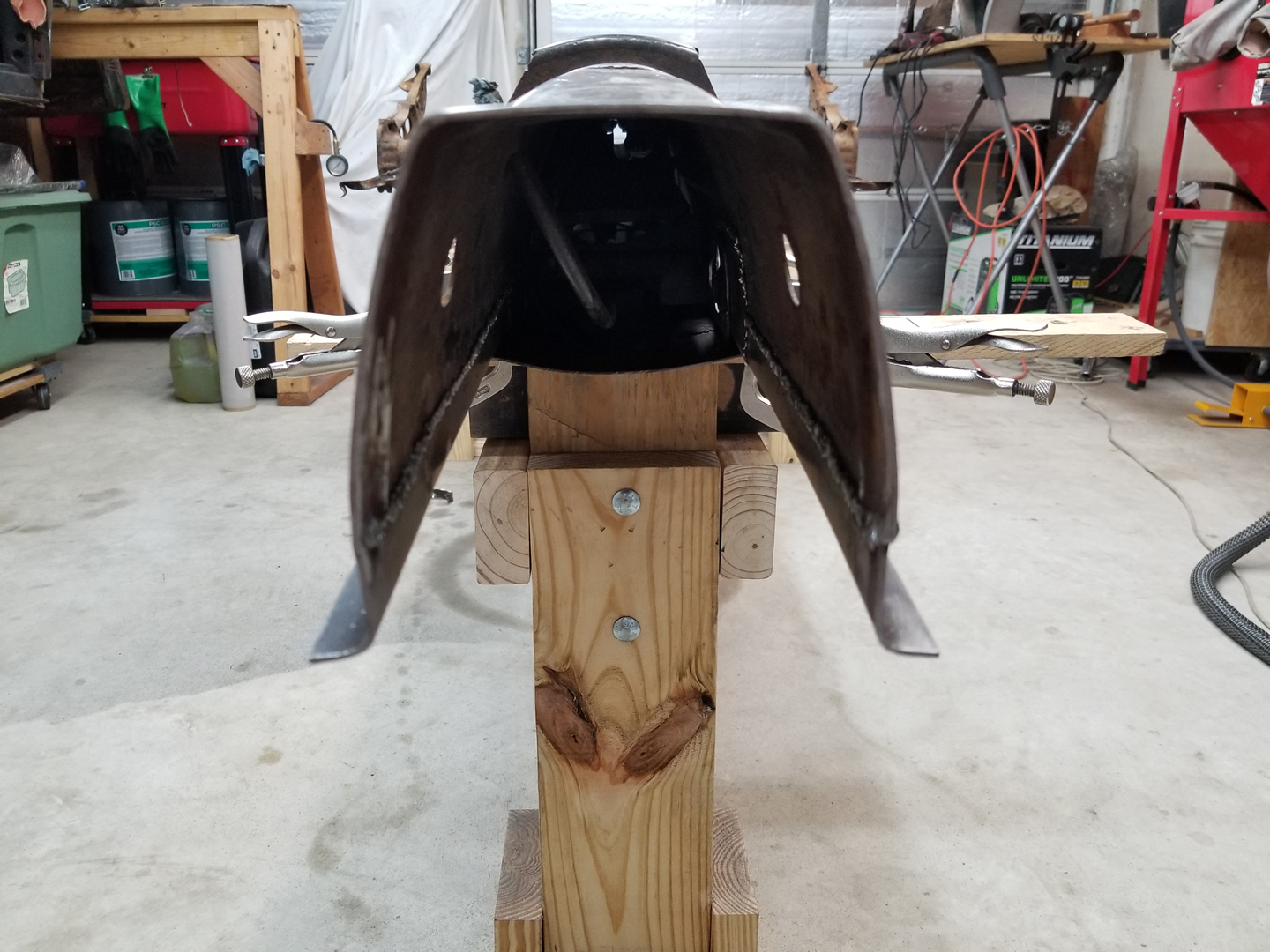
I cleaned up the areas where the frame head was welded to the tunnel, but still need to complete the seam welds on the outside of the tunnel where I couldn't access them due to the frame head covering them up. I just feel better having it welded on both sides. I will ground them down where the new frame head will contact the tunnel. On the passenger side of the tunnel there is one area that is a little pitted and instead of cutting it out and patching it, I will remove the rust and build the area up with weld. It's not quite bad enough to cut out and replace.
|
|
|
|
|
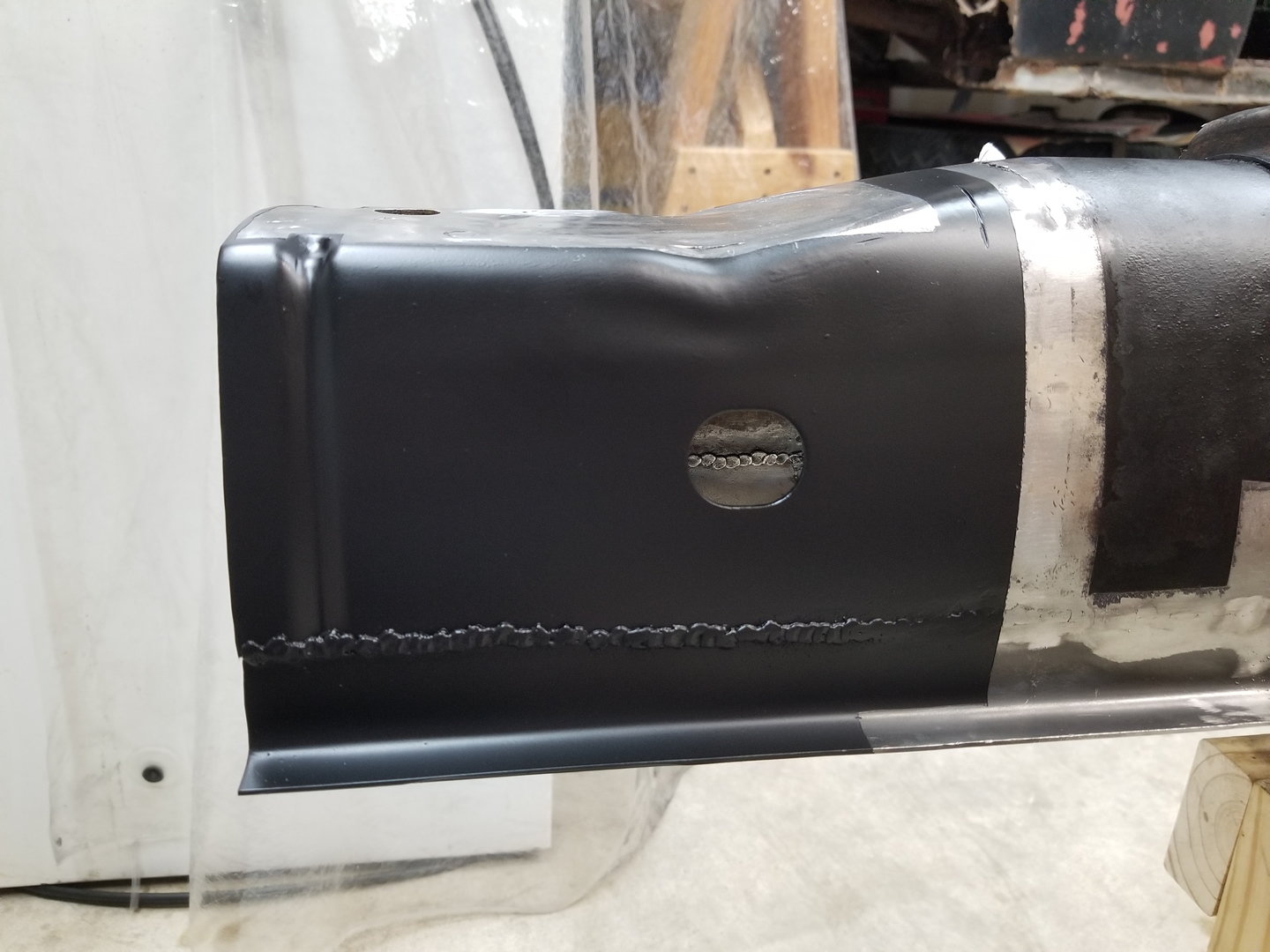
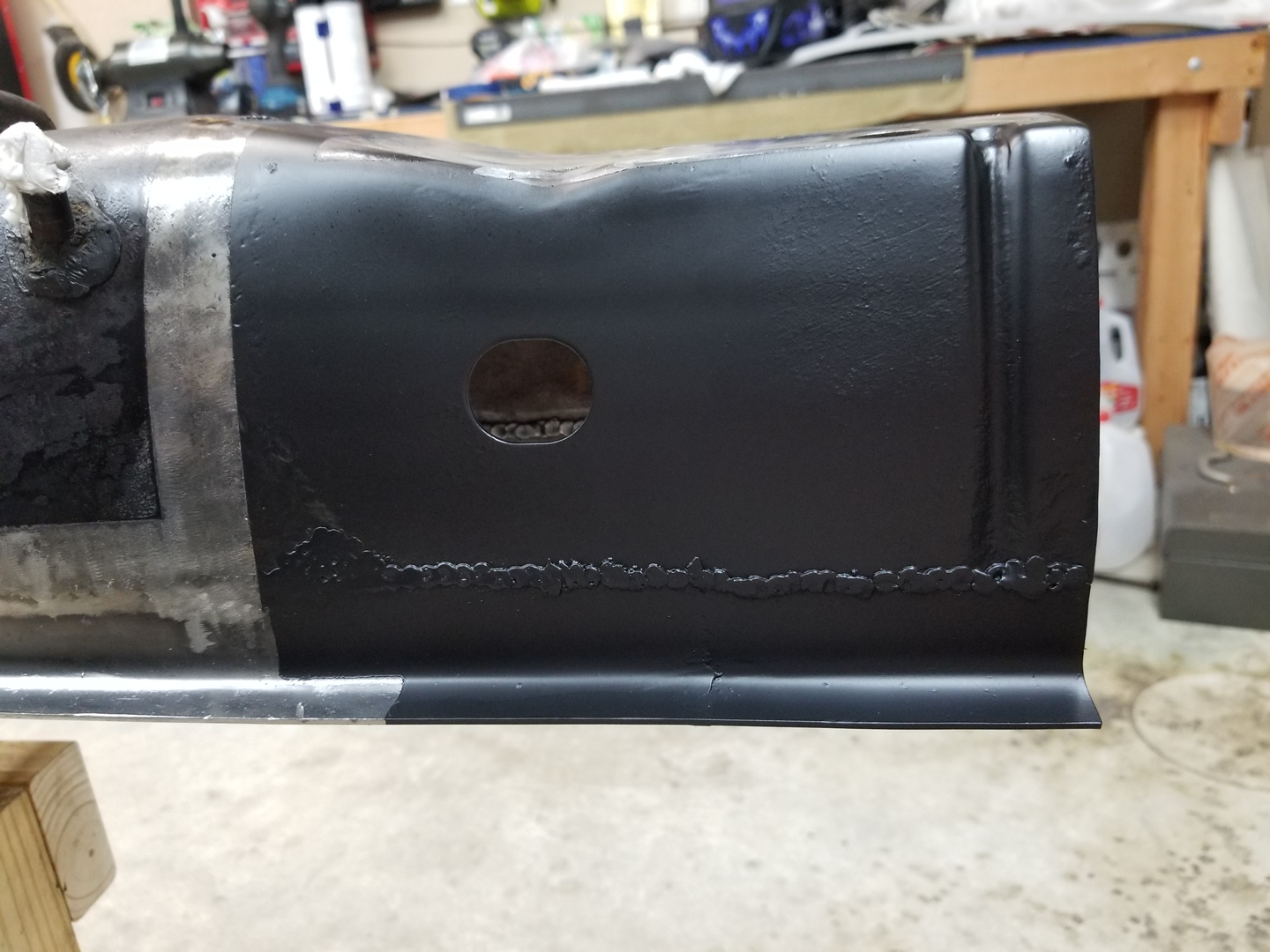
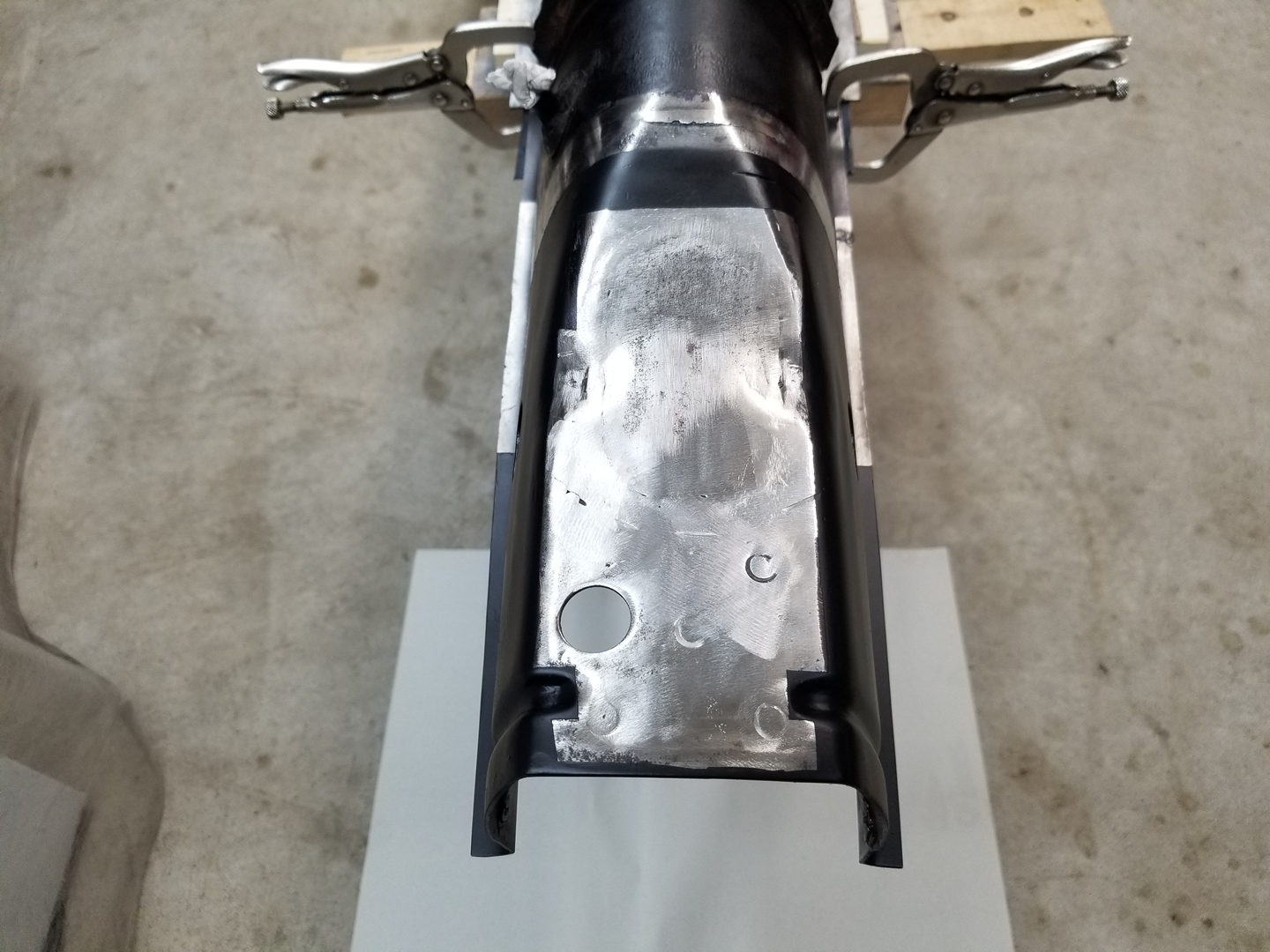
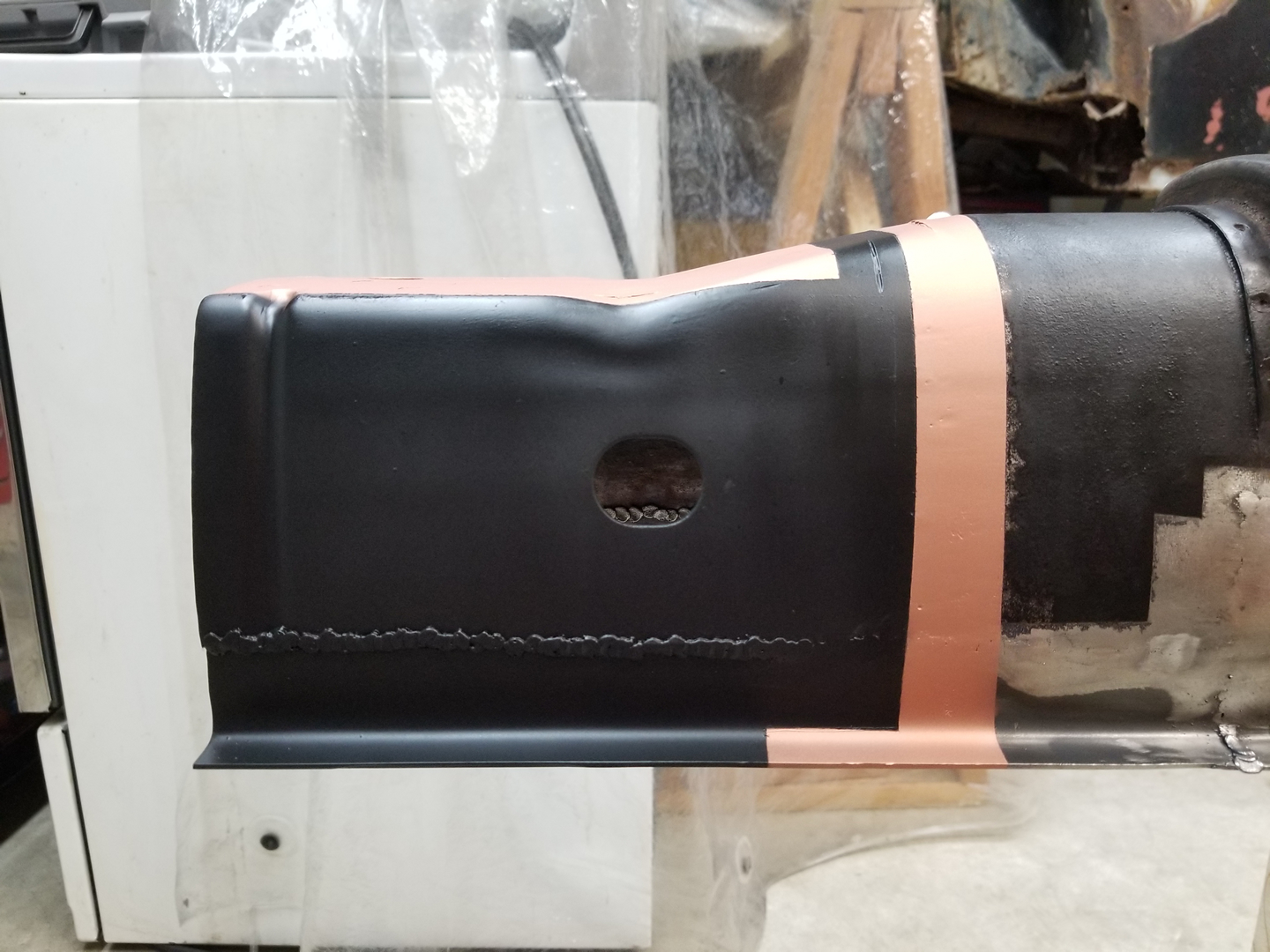
I finished the welds on the outside of the tunnel and ground them down where the frame head contacts the tunnel. And then I wire-wheeled the ouside of the tunnel to remove any paint and rust, wiped it down with a degreaser, and then sprayed the areas that are not going to be welded with Eastwood Matte Black Rust Encapsulator. These areas are going to be hard to get to and protect once the frame head is welded on and I want to make sure that they are protected and sealed. The areas that are going to be welded were sprayed with U-POL Weld #2 Copper Weld Through Primer. It's now ready for the new frame head!
|
|
|
|
|
|
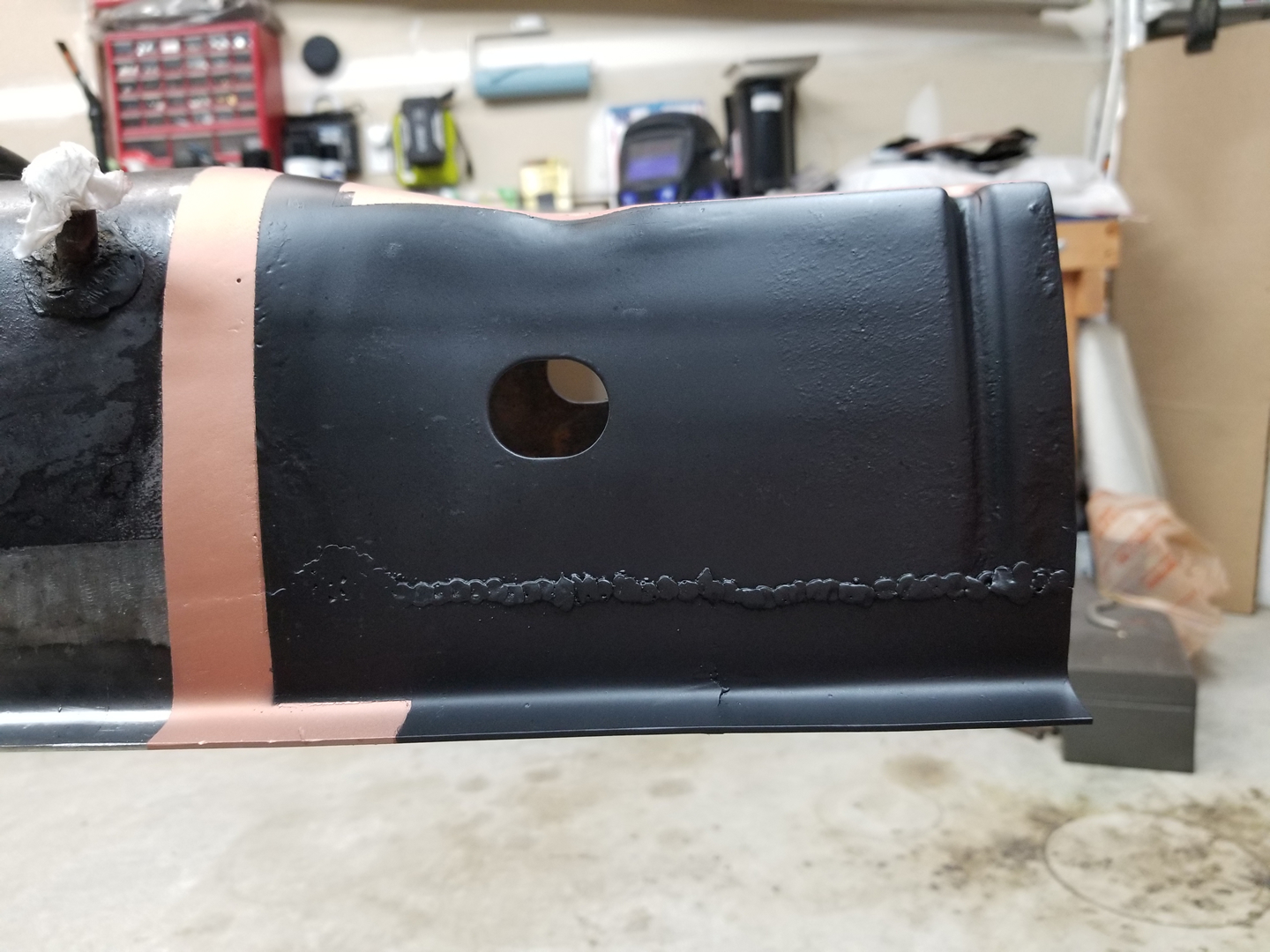
|
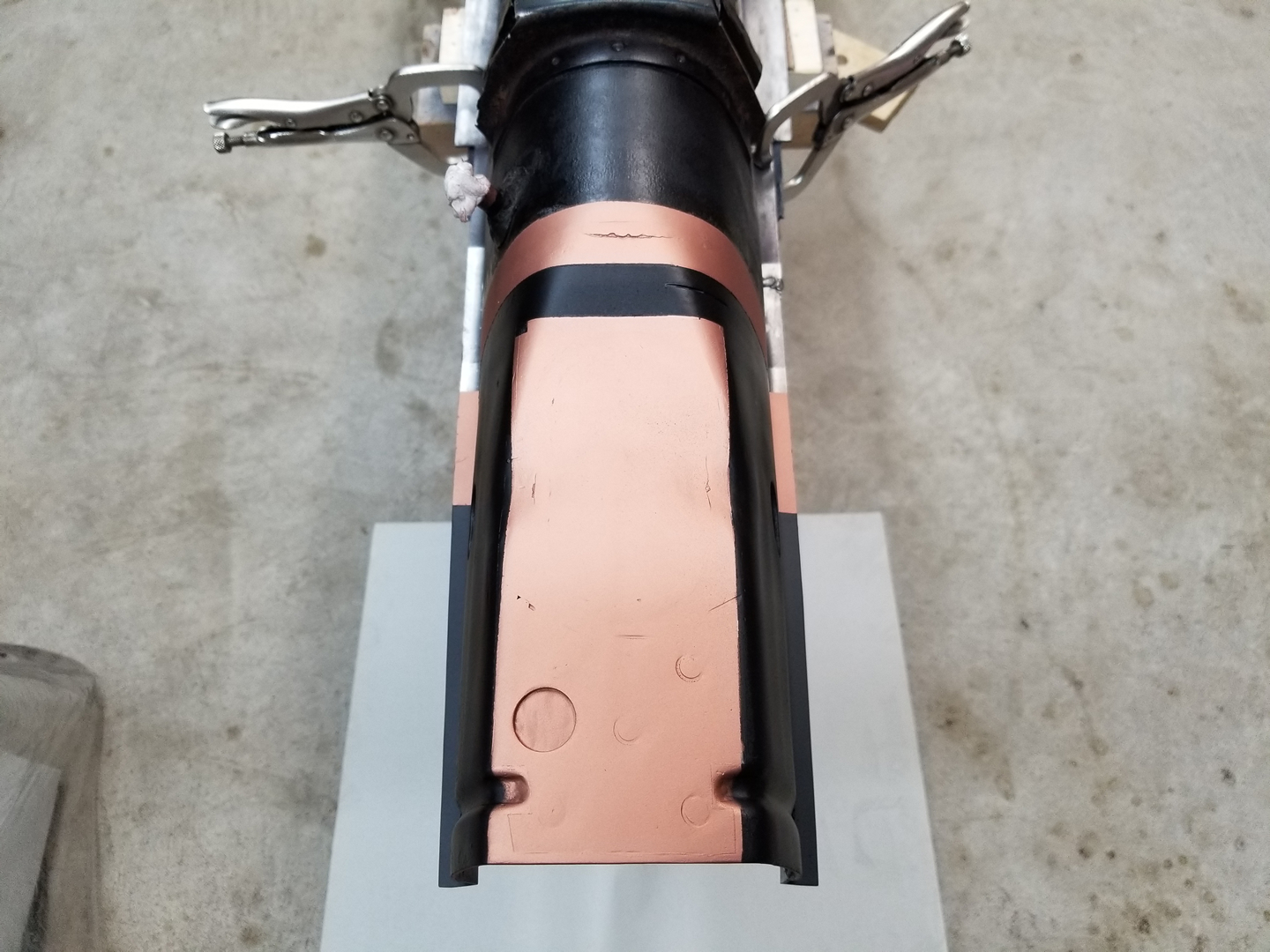
|
Disassembling, Preparing, and Welding On Donor Frame Head #2
by Garage Weasel on Jun.25, 2021, under Chassis
Over time, I realized that the first donor frame head was just too different to use on my chassis. It is from a 1965 and is a slightly different design than mine. It's close, but I would have to alter the pieces of it I intended to use too much and would make the replacement more complicated than it needed to be. I found a really solid 1963 one for sale in thesamba.com classified ads and purchased it. It was an exact match. It arrived in great condition and was very well packaged for protection from shipping damage. In fact, it was by far the best packing job I've ever seen. These are the pictures that I received from the seller before I purchased it:

|

|
||
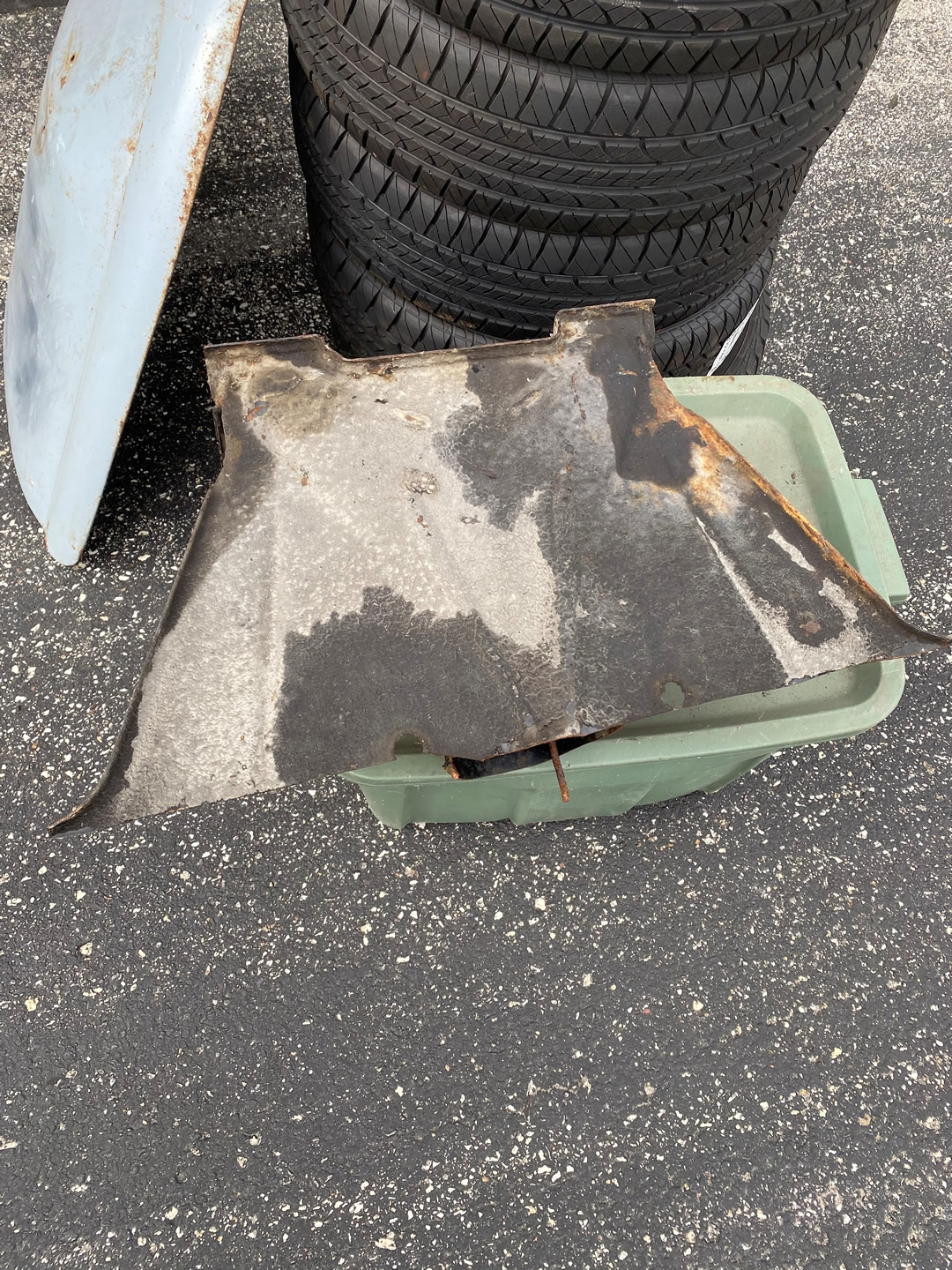
|
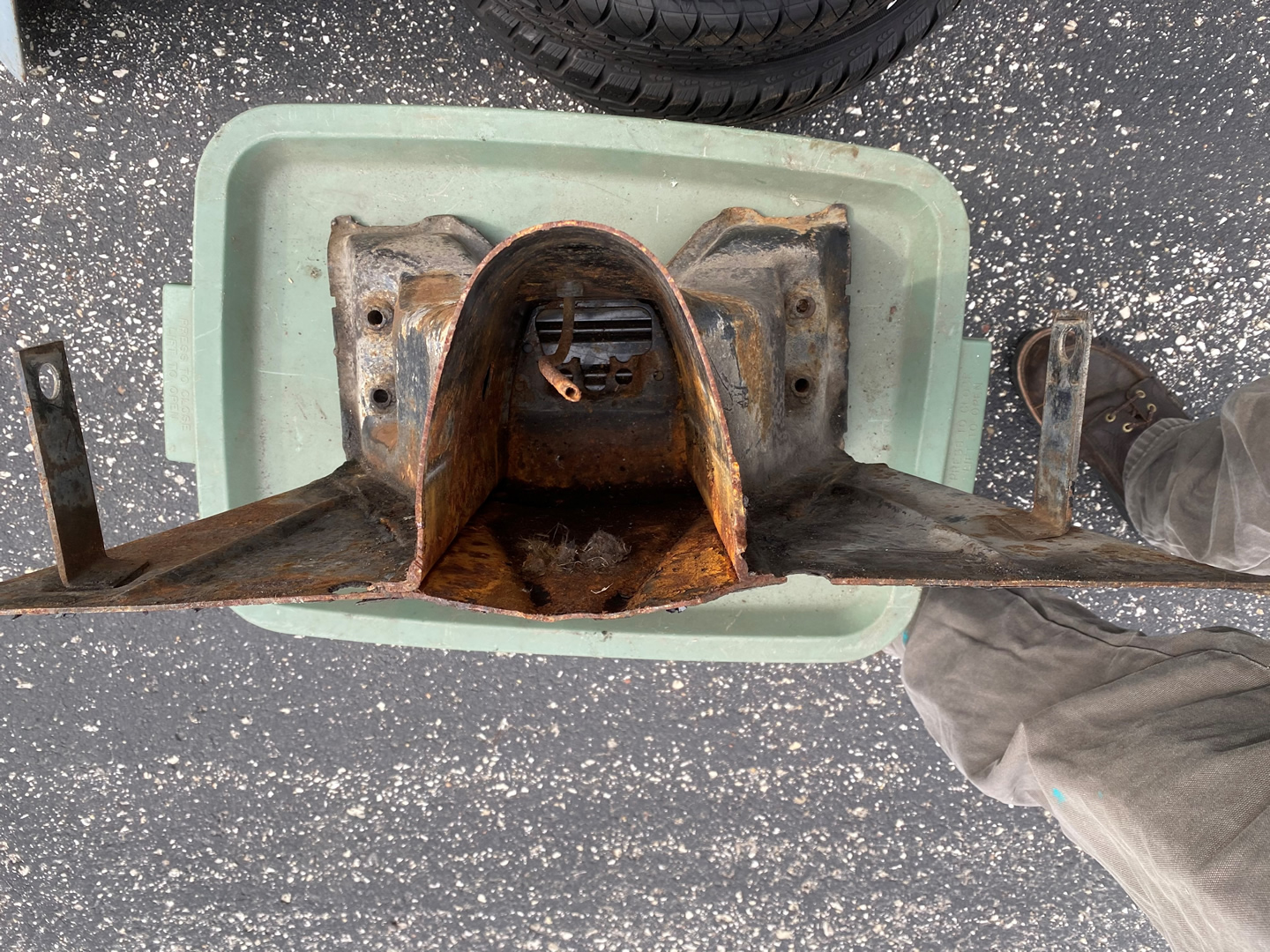
|
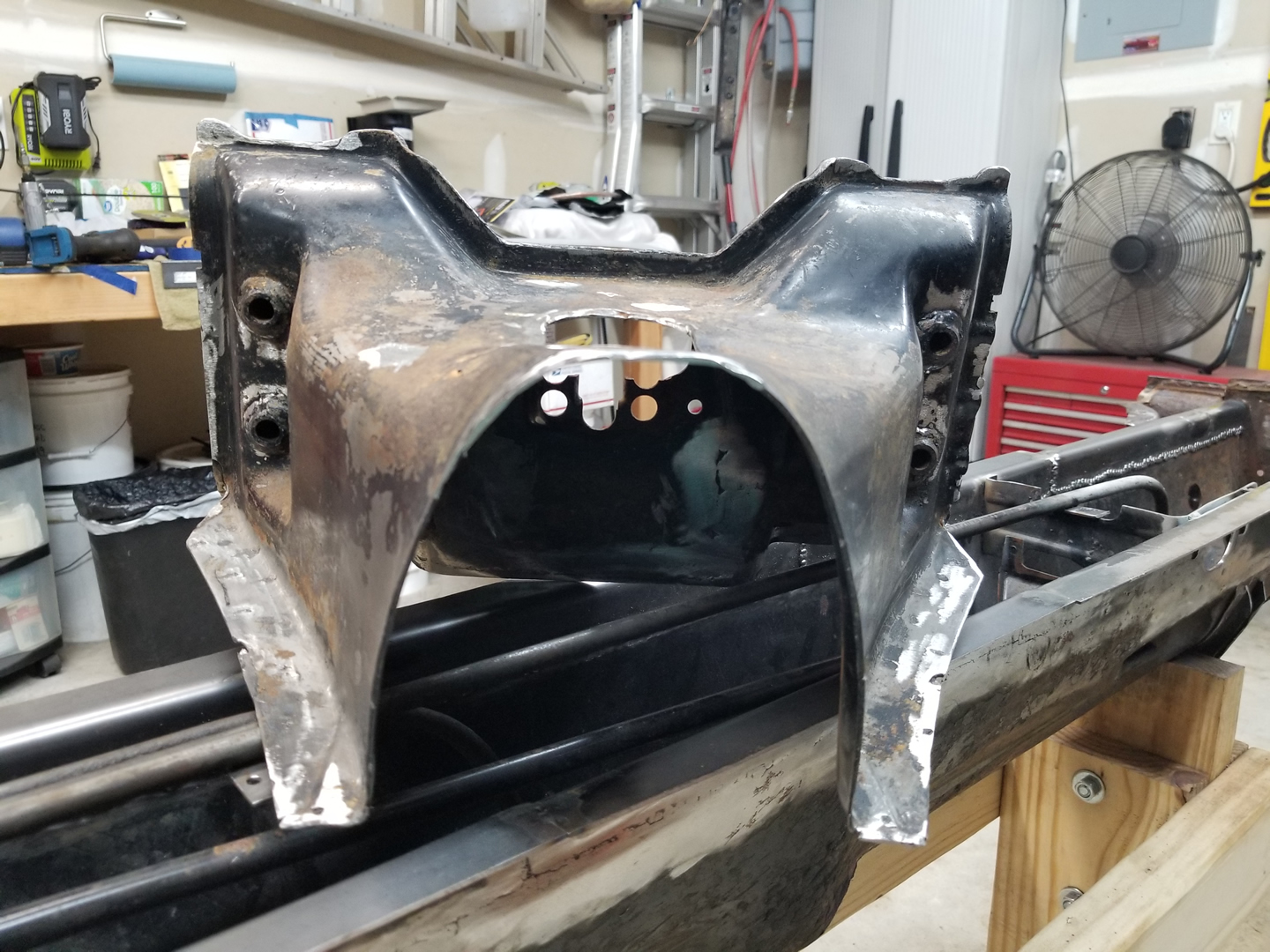
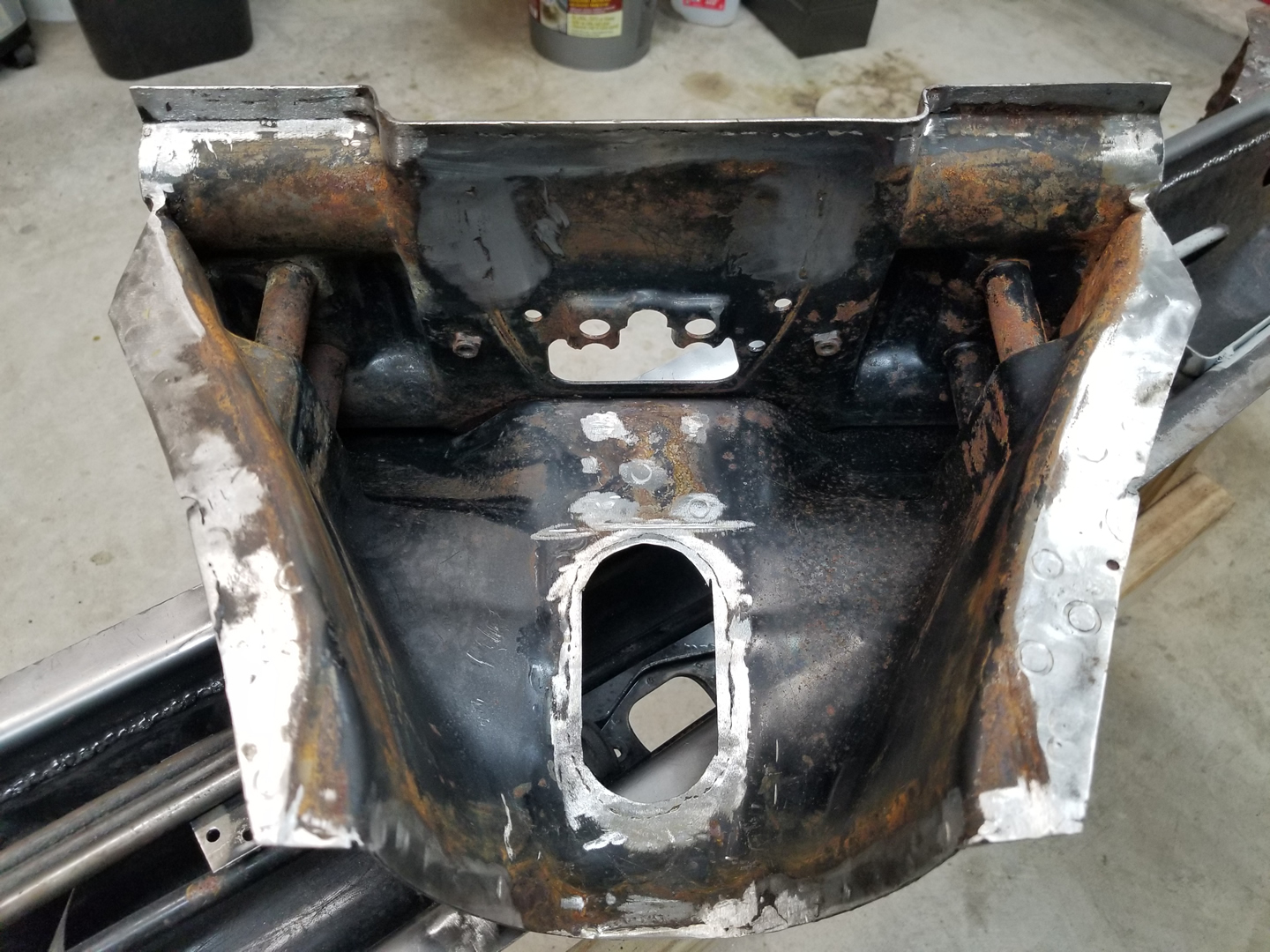
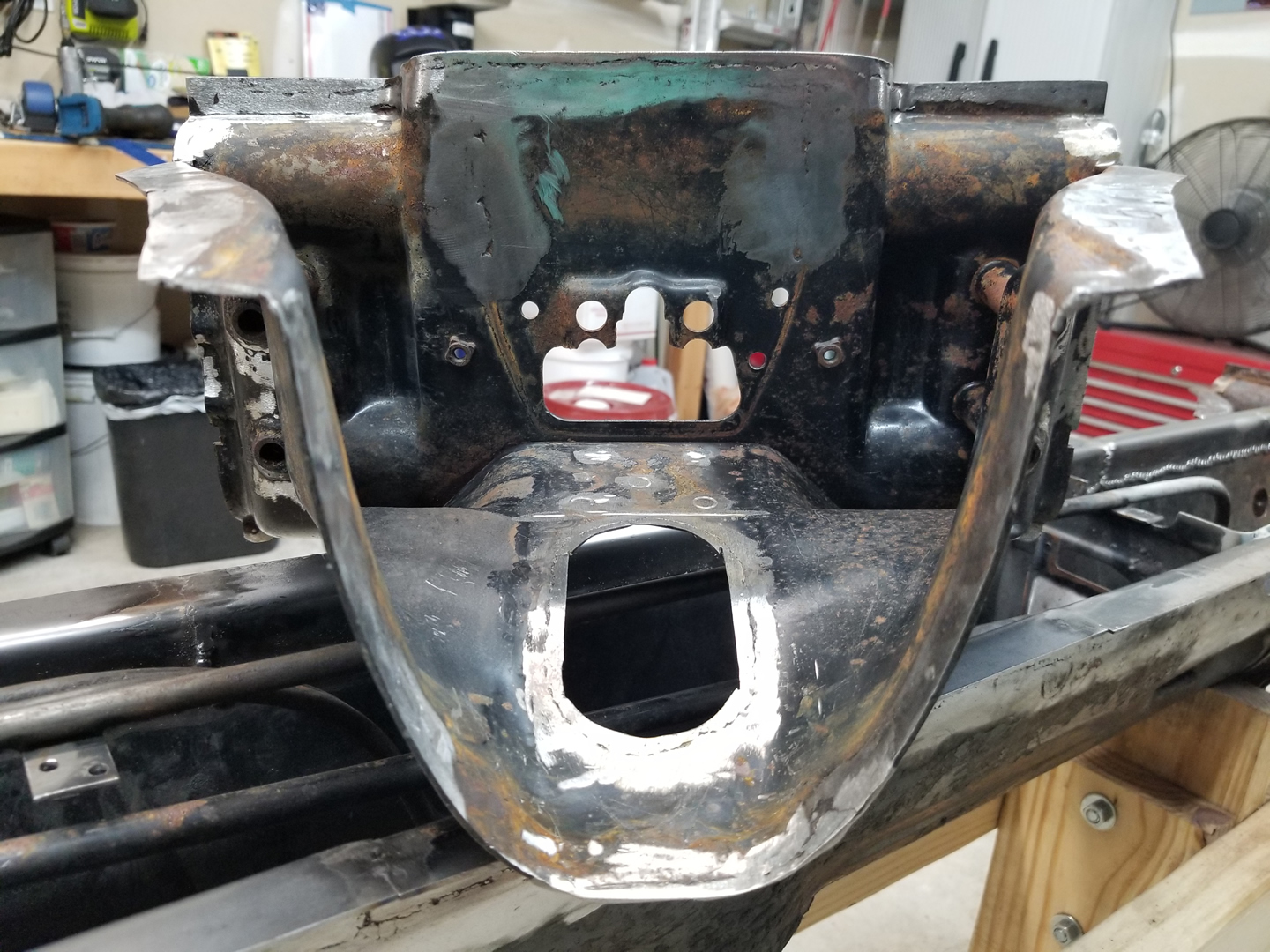
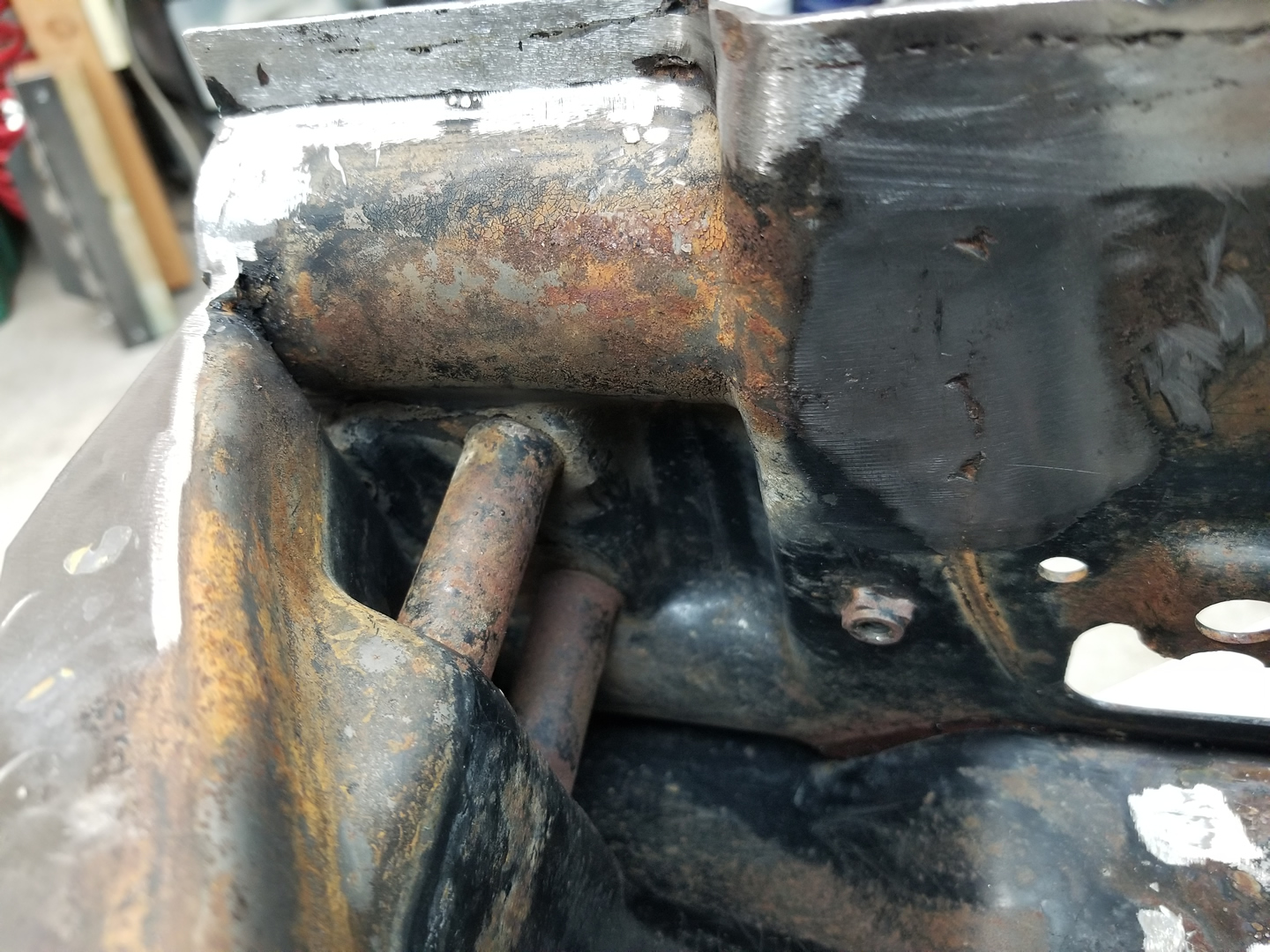
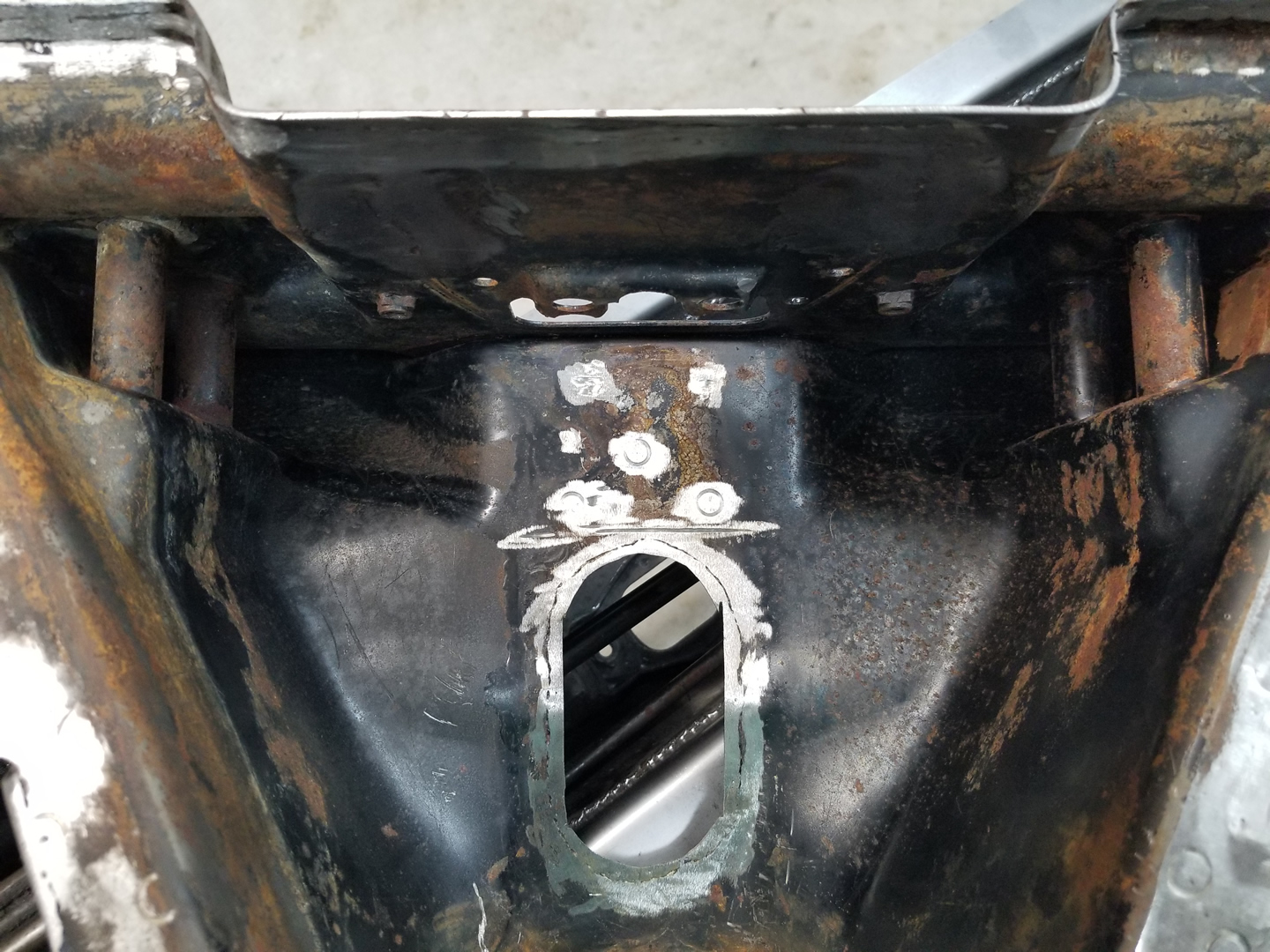
After much consideration, I decided to use the outer portion and front plate of this frame head and removed the tunnel and bottom plate portions. I removed large areas of both to make it easier to remove the areas that were spot and seam welded. I included a picture below that shows all the pieces that had to be removed.

|
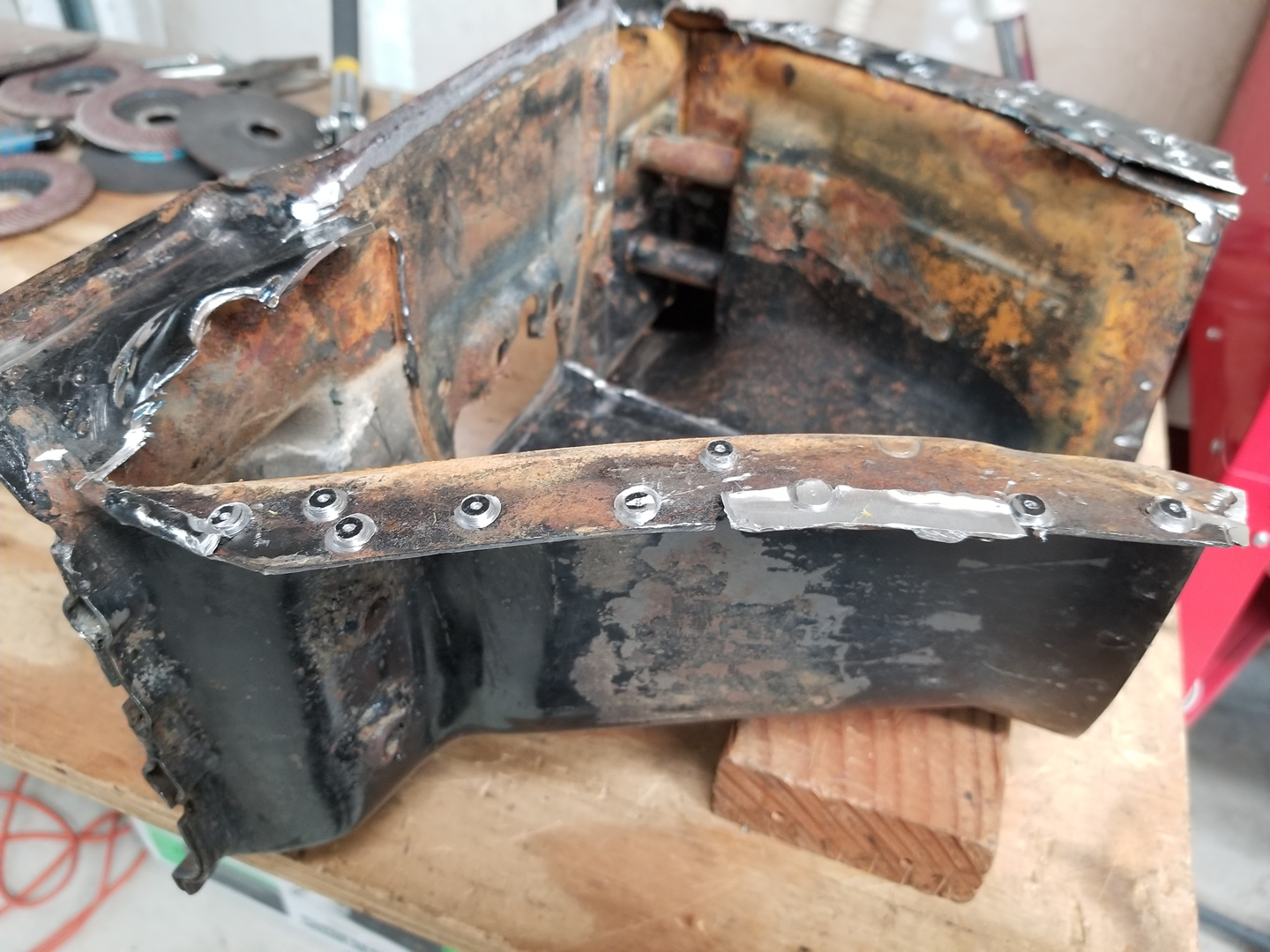
|
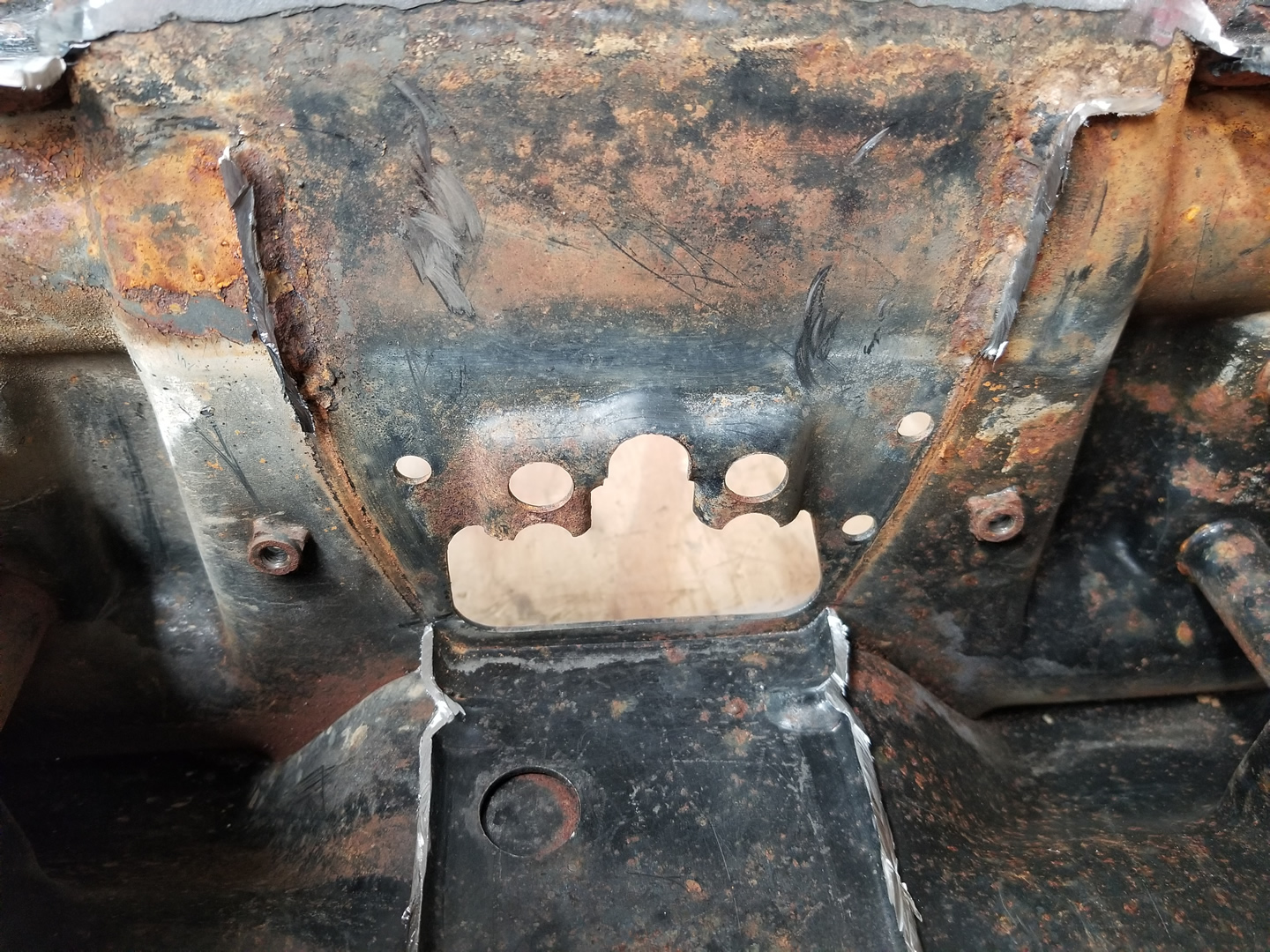
|
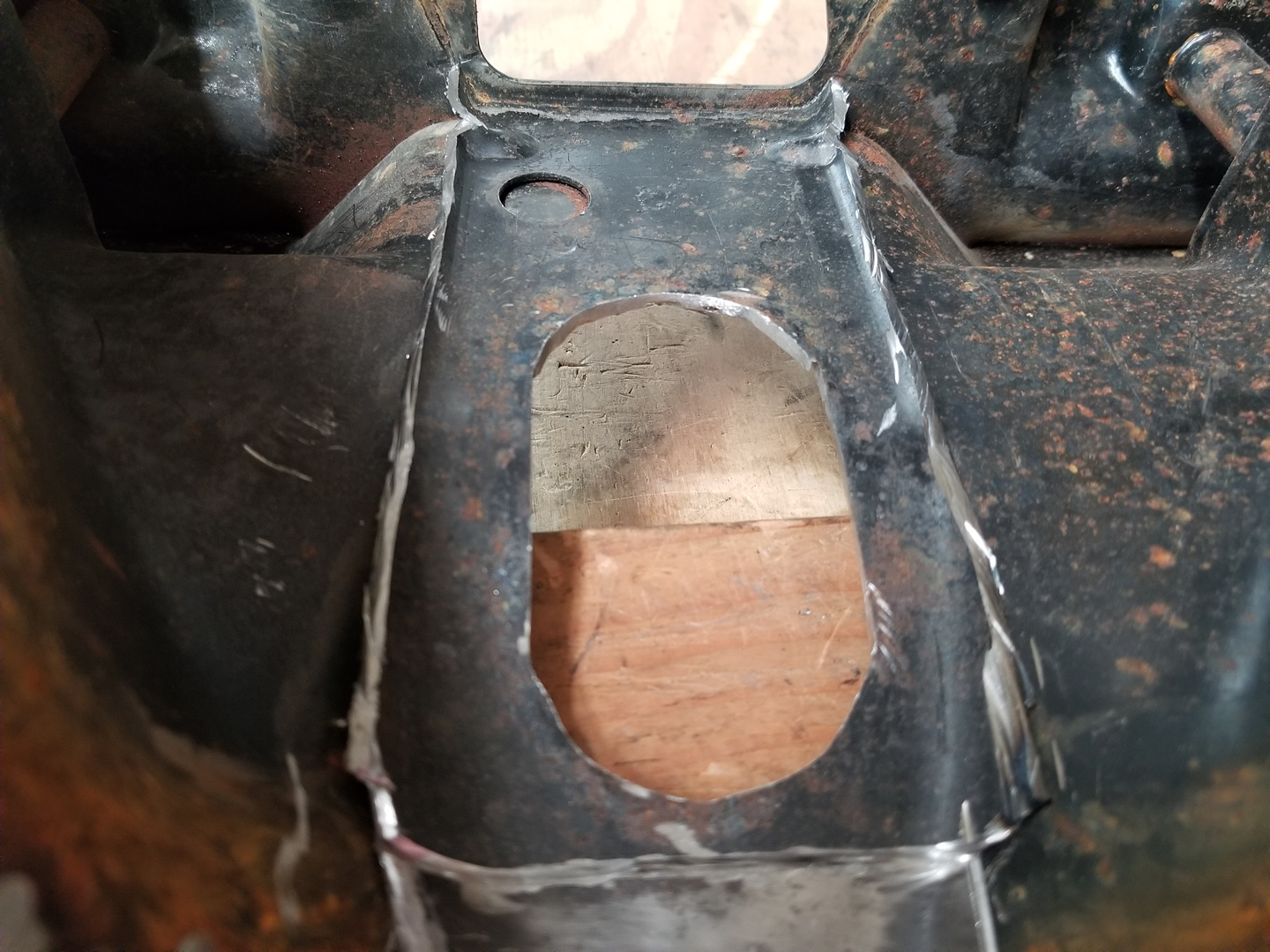
|
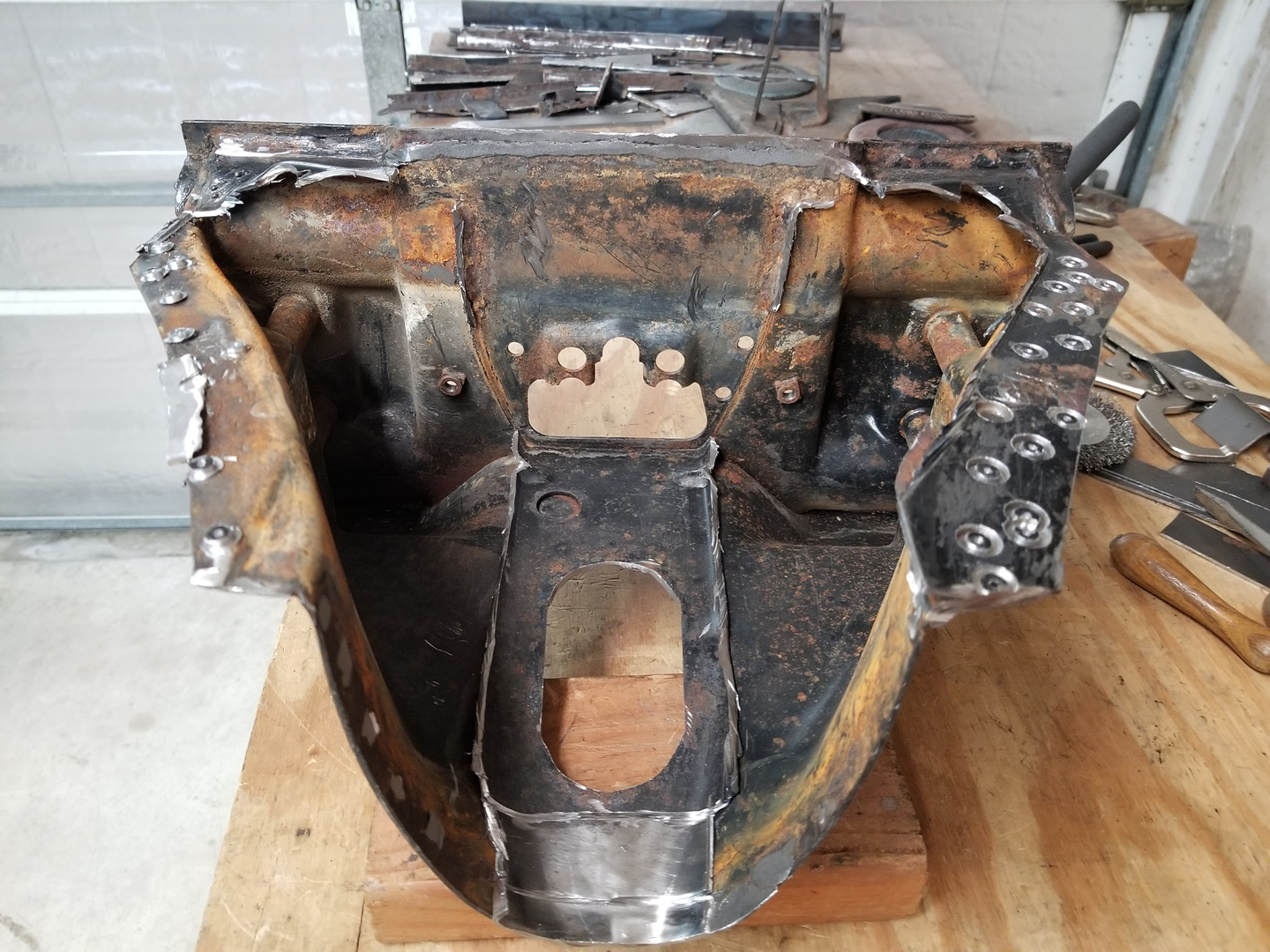
|
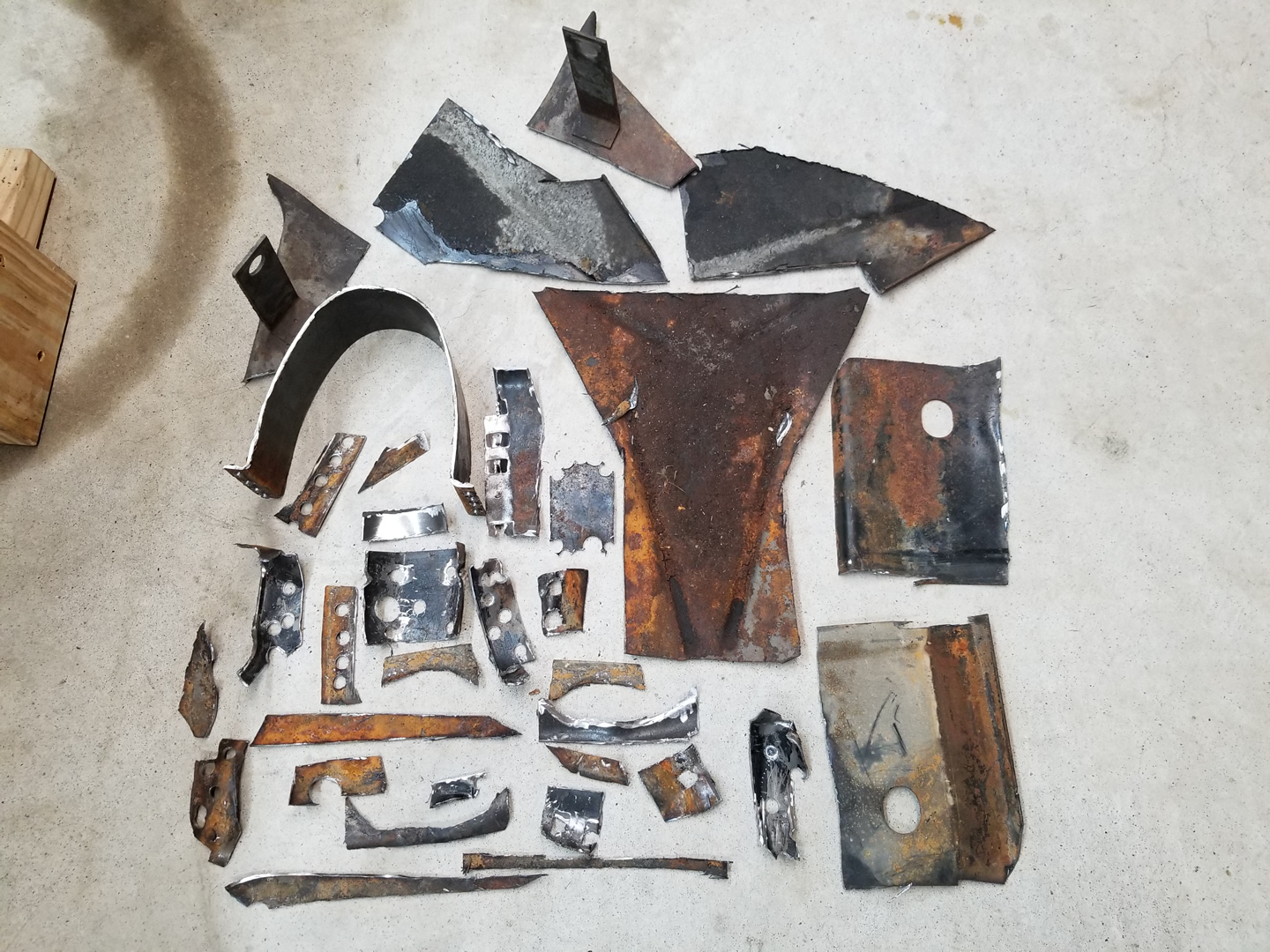
|
Here's what it looked like after everything was removed:
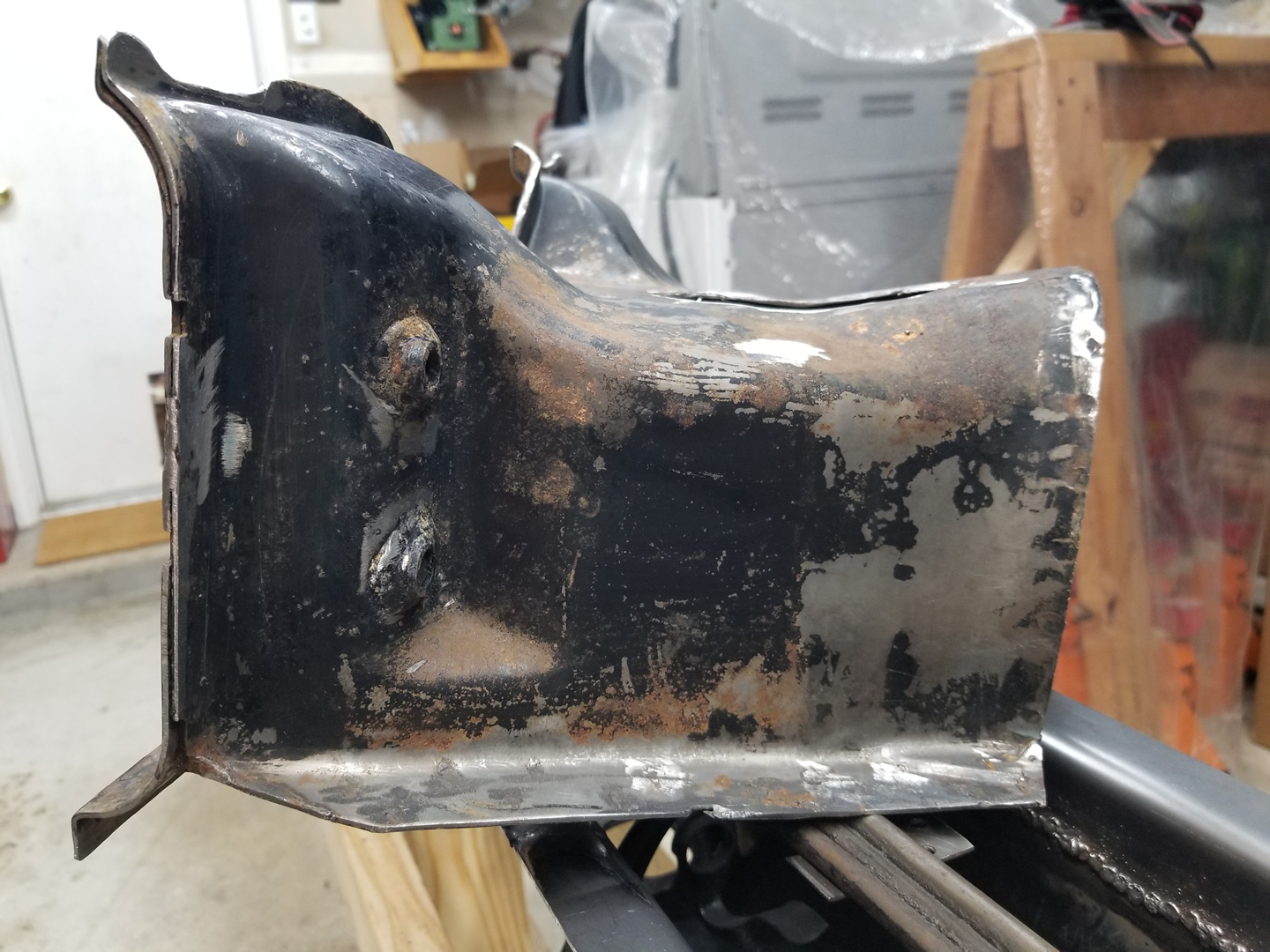
|
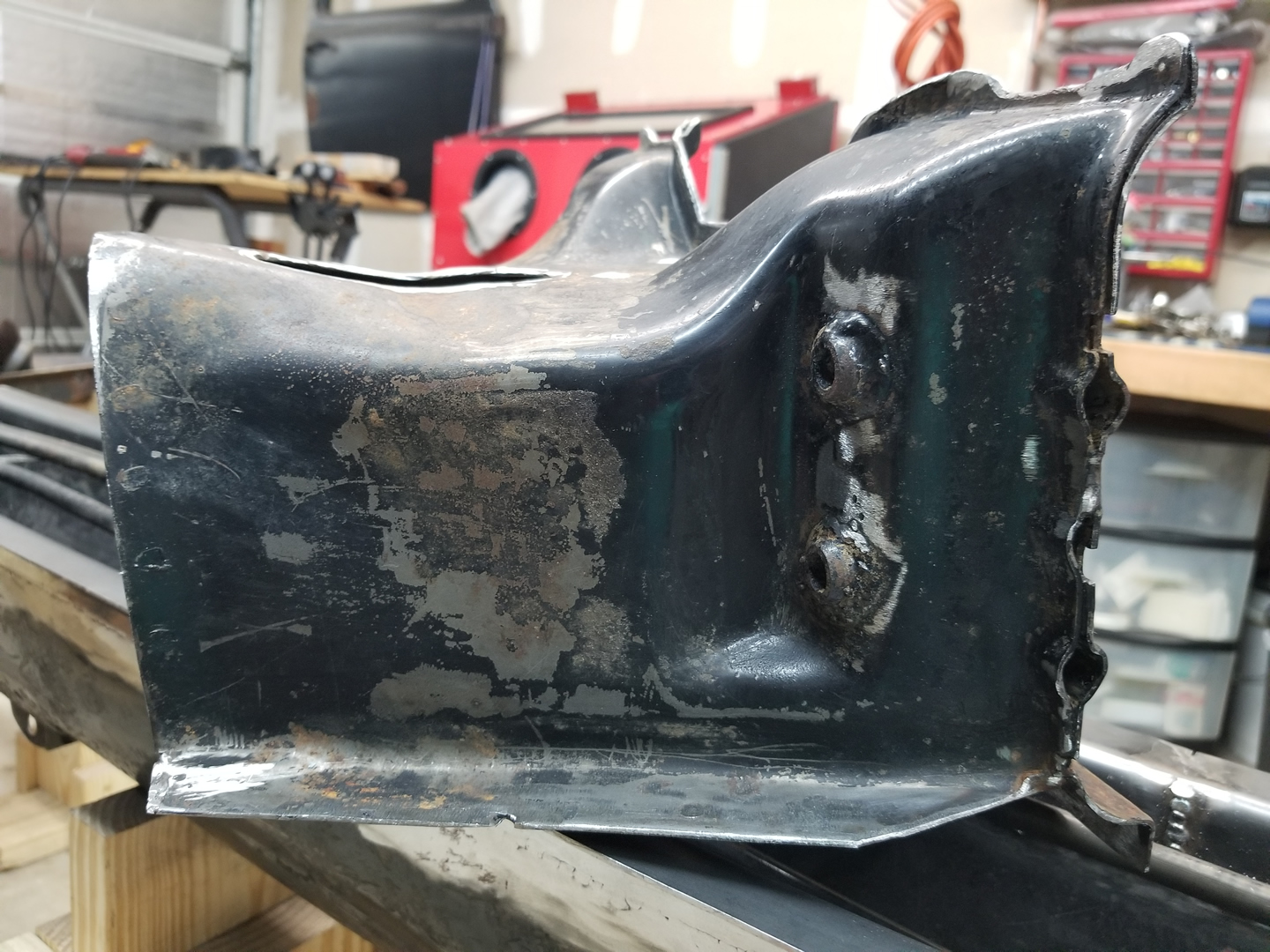
|
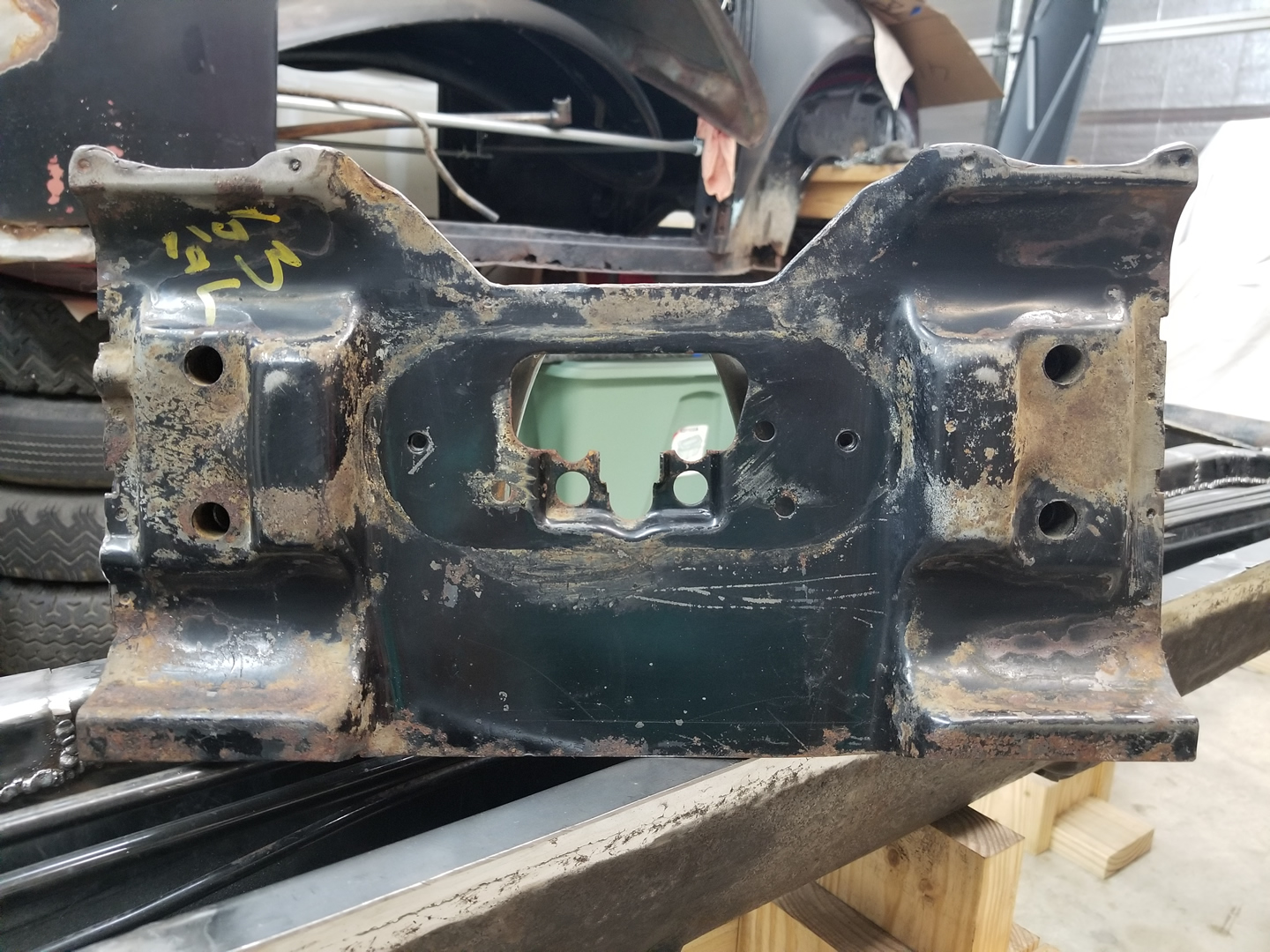
|
|

|
|
|

|
|
|
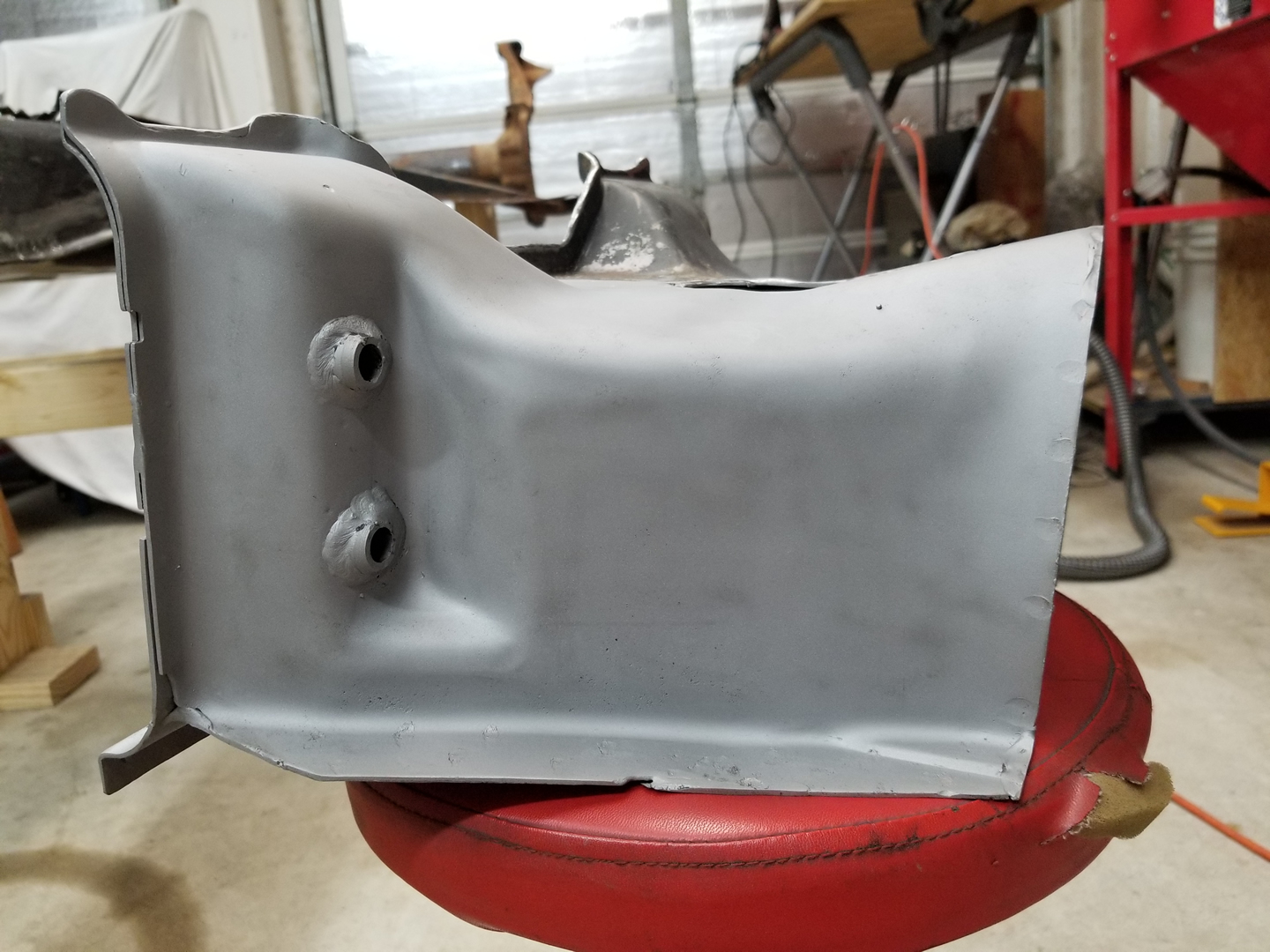
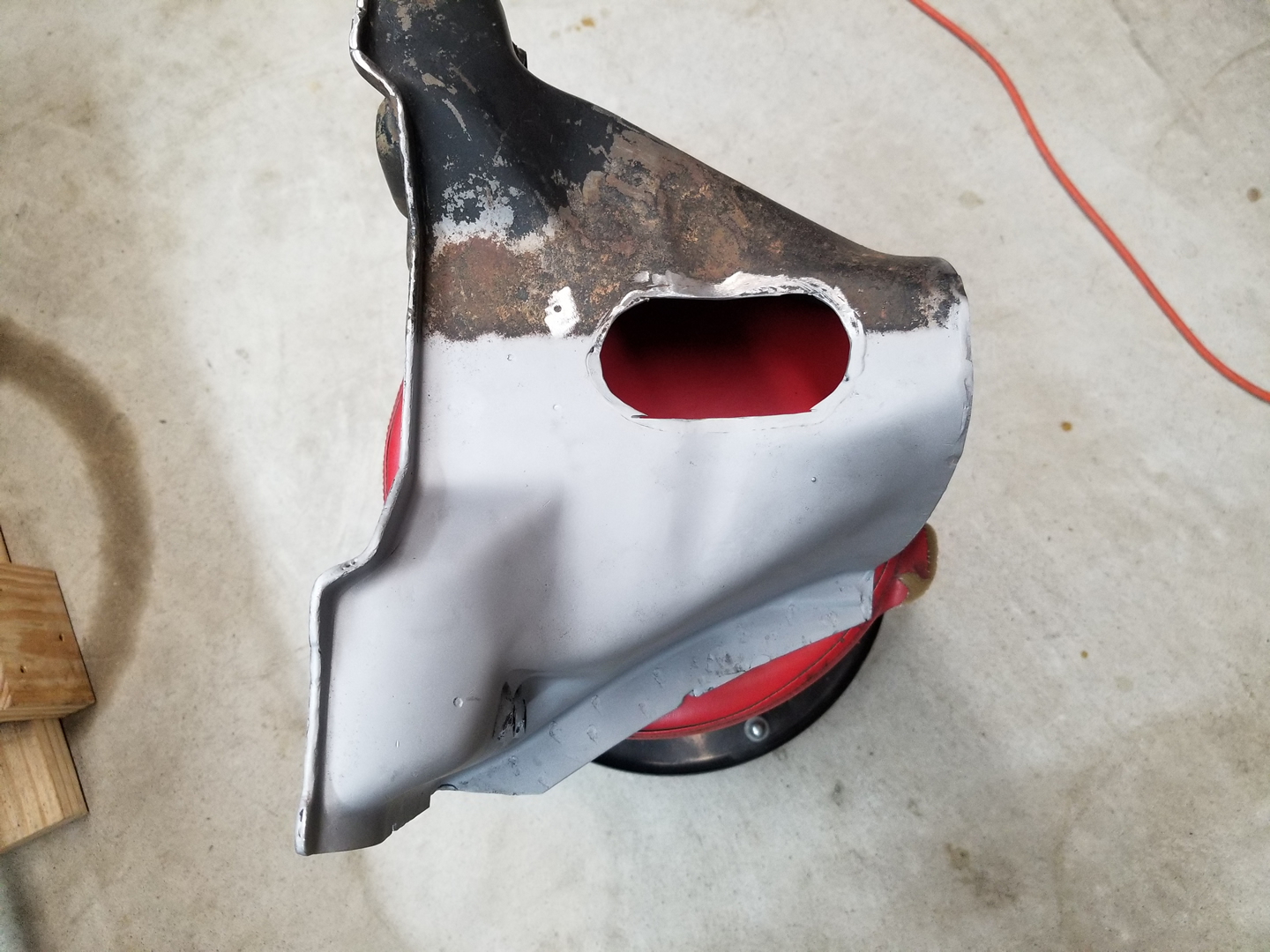
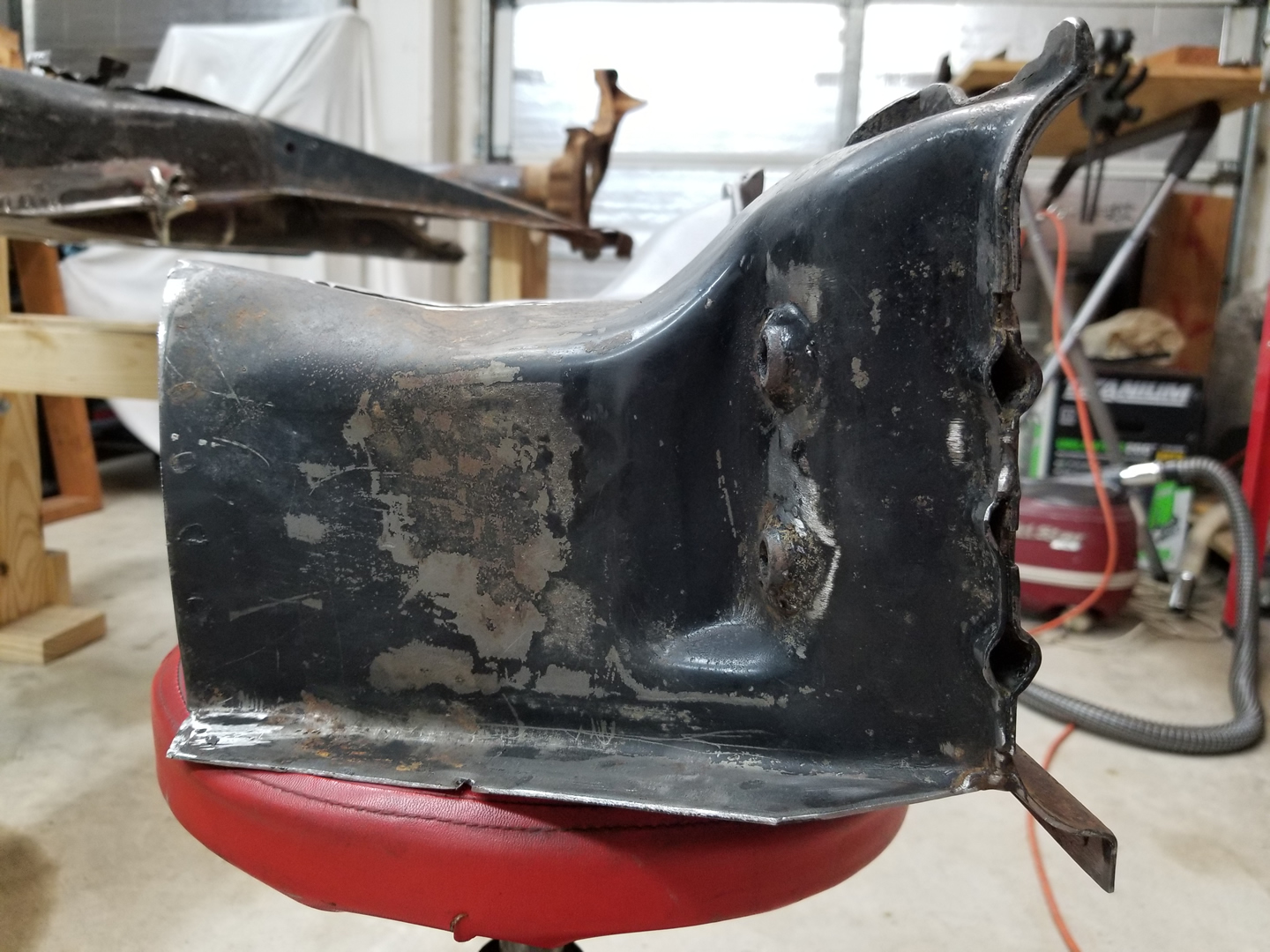
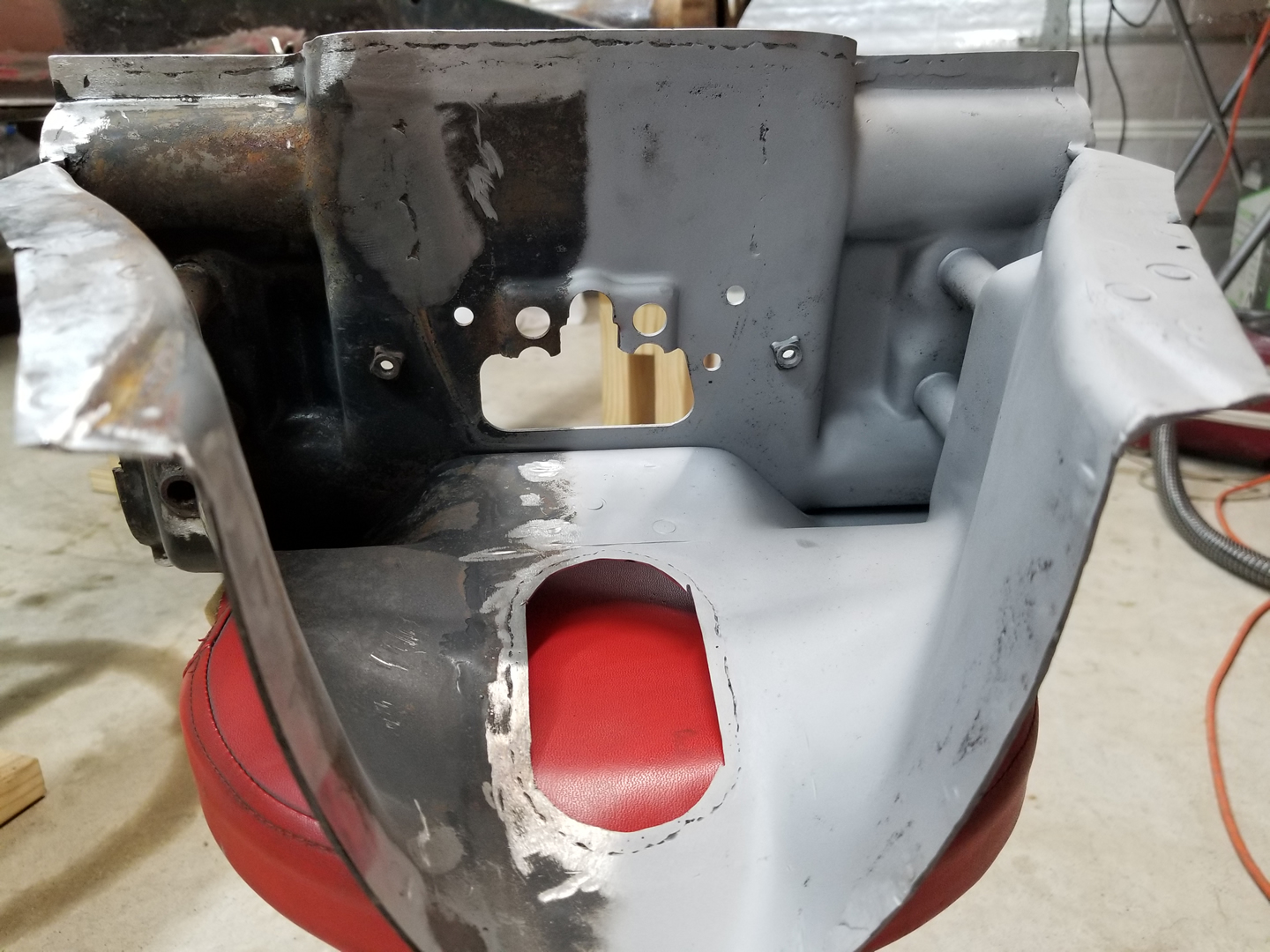
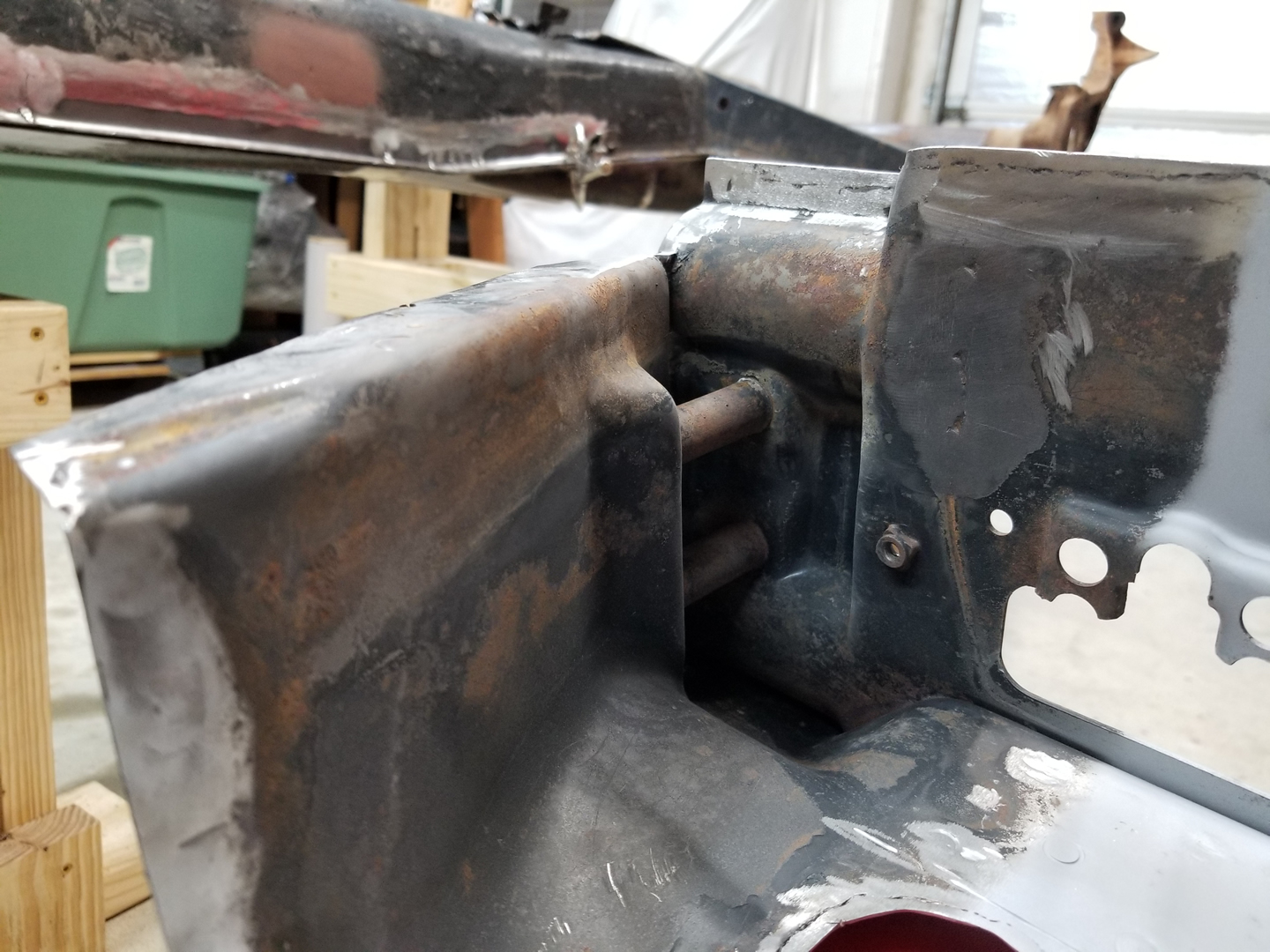
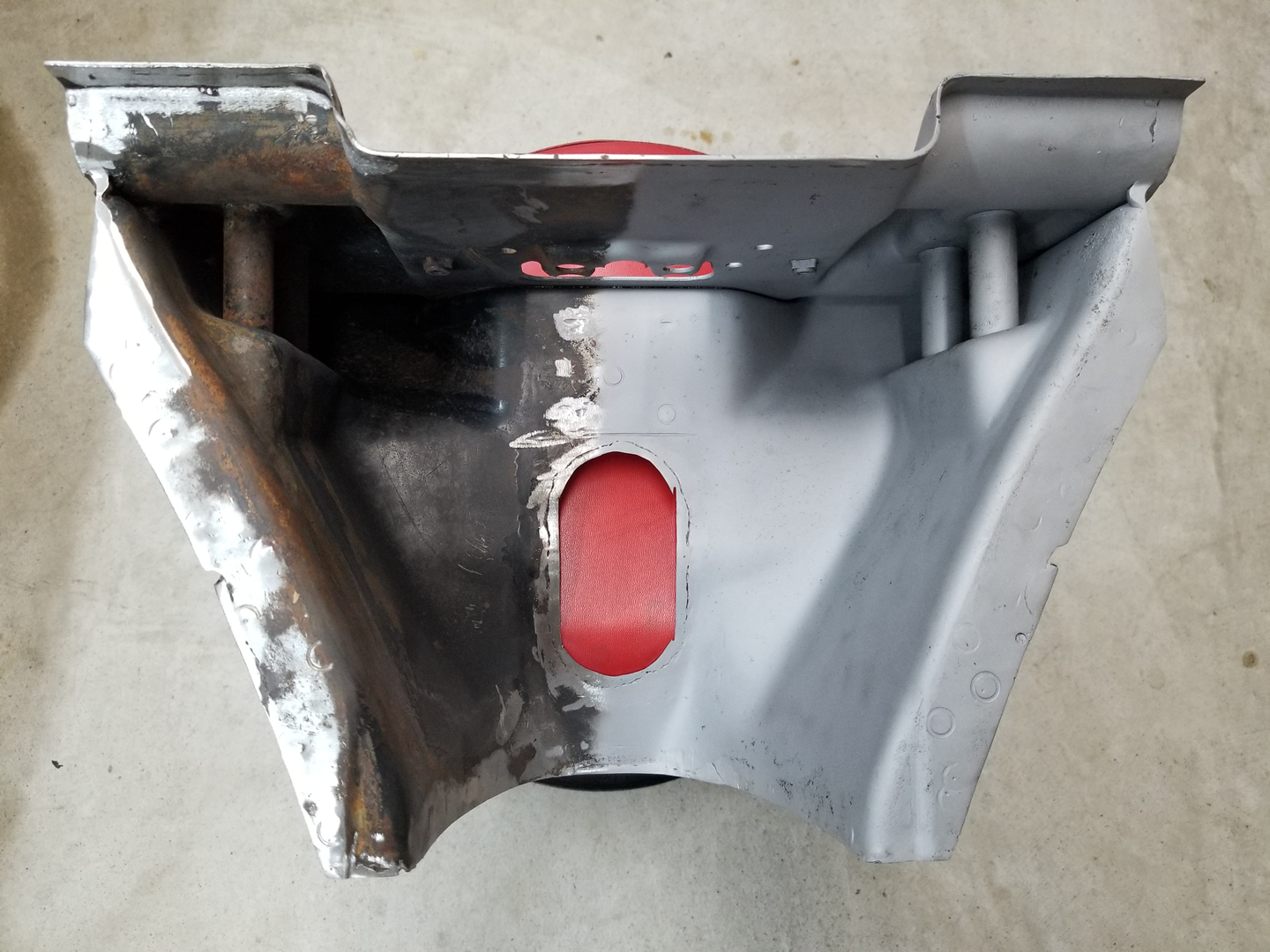
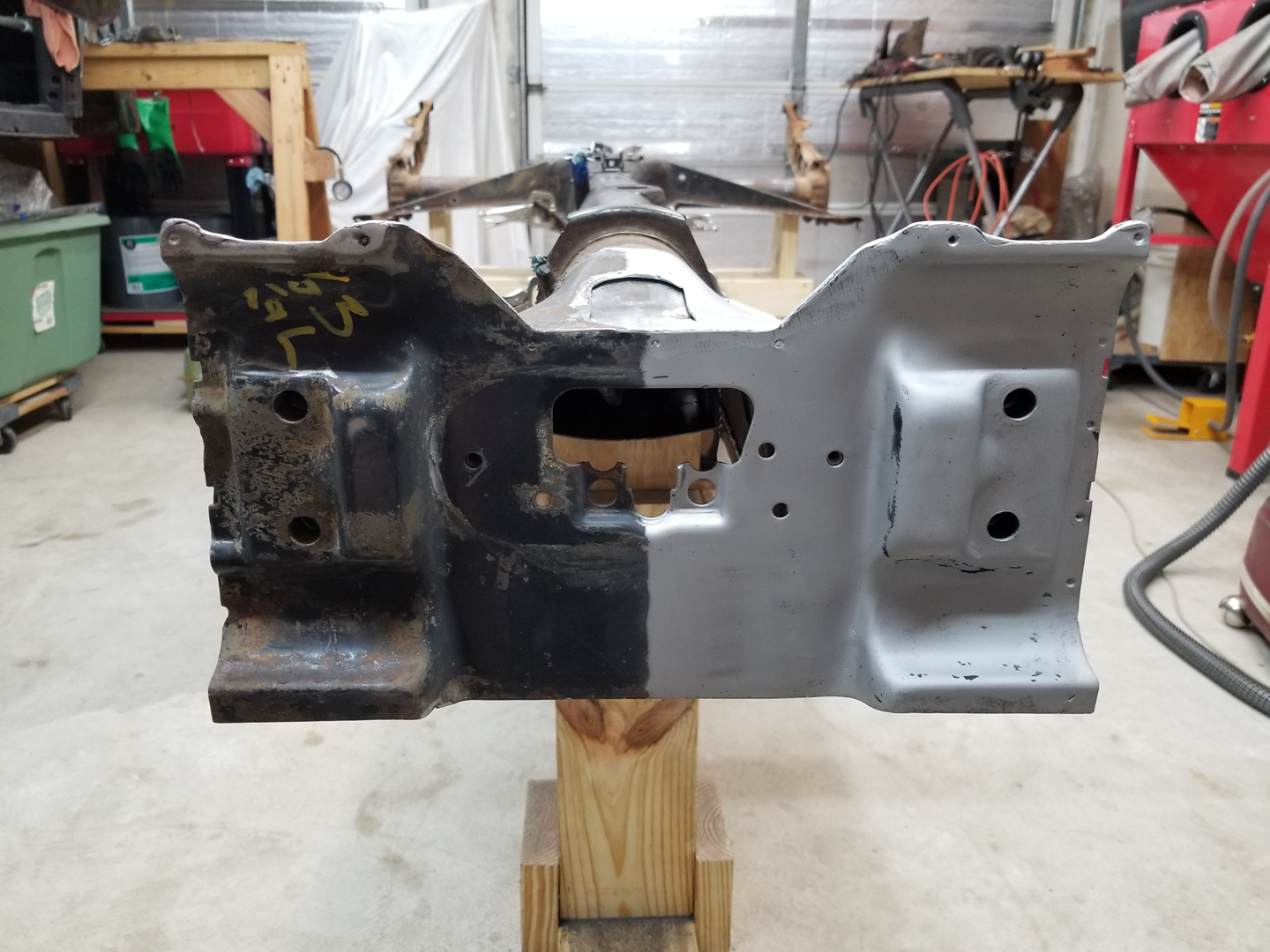
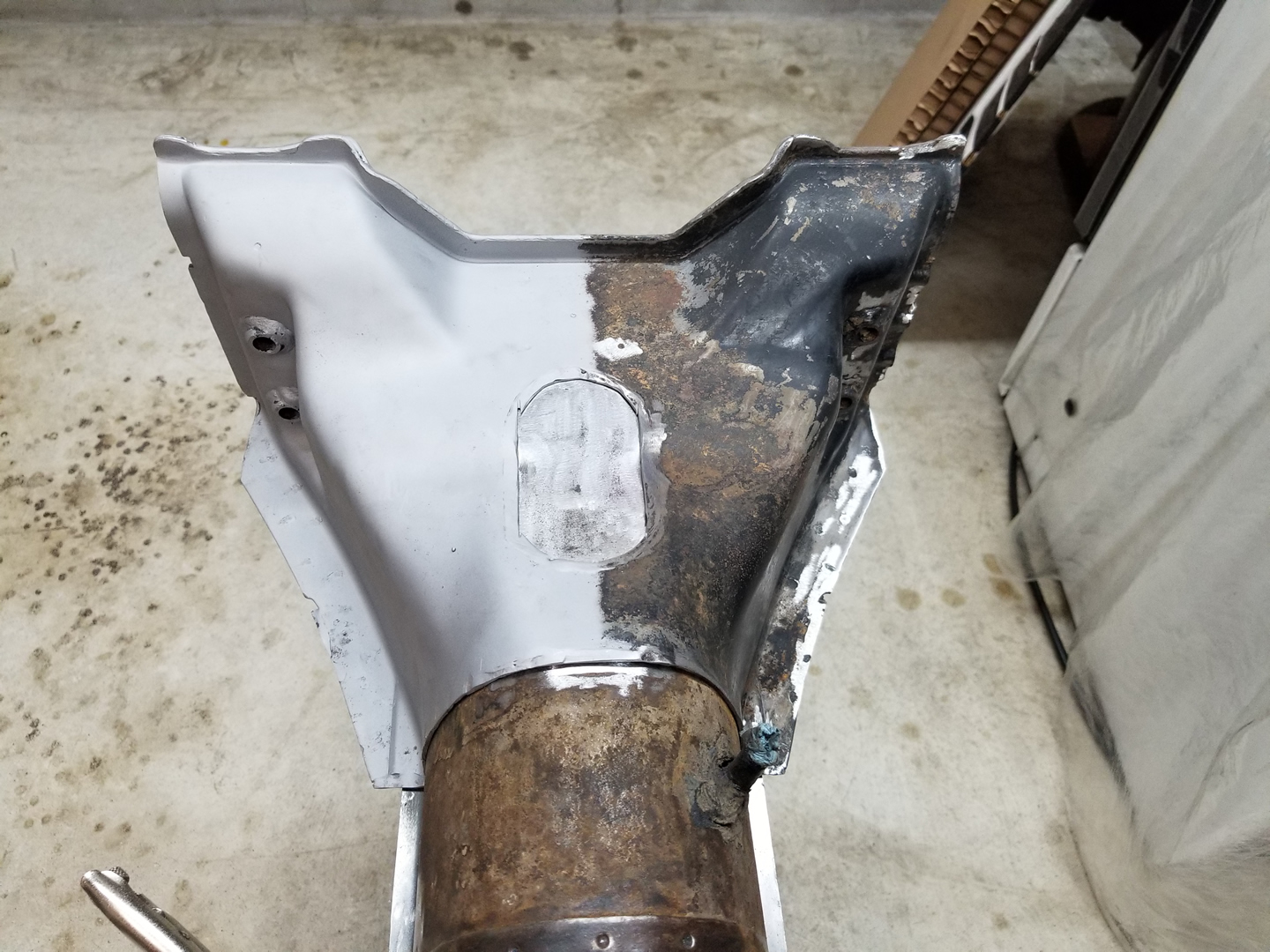
I then cleaned it in the parts cleaner, briefly soaked it in rust remover to loosen up the rust, and then lightly sandblasted half of it just to see what it would look like. I was very pleased! It is very solid metal with only a slight bit of pitting. Overall, it is a much better thickness of metal than an aftermarket part and almost identical to my original.

|
|
|
|

|
|
|

|
|
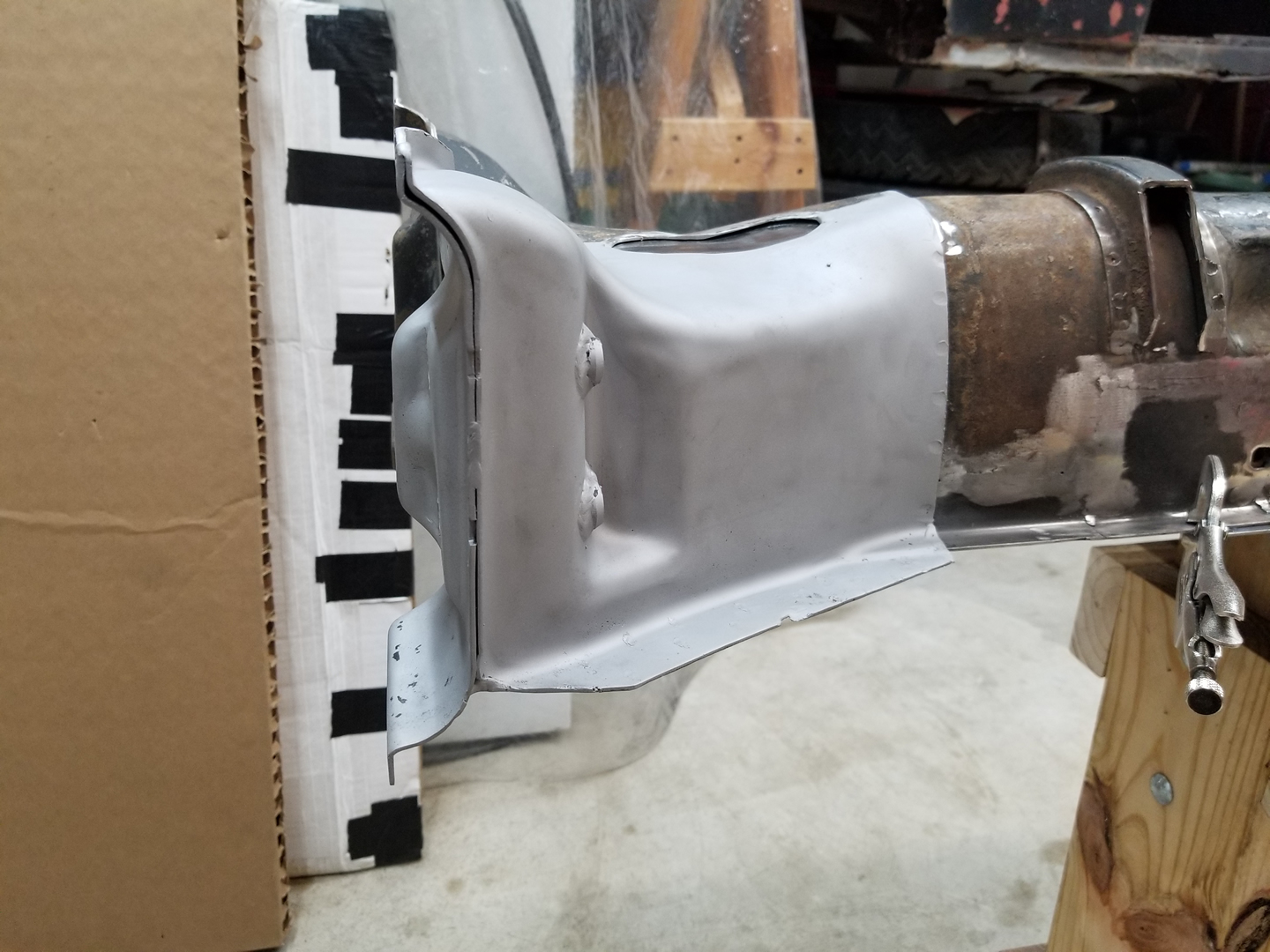
I placed the new part on the tunnel to check the fit and was surprised how well it fit. On the top, it fit very well and was sprung outward on the bottom sides a little, but was easily clamped down for a very snug fit all around.
|

|
|

|
|
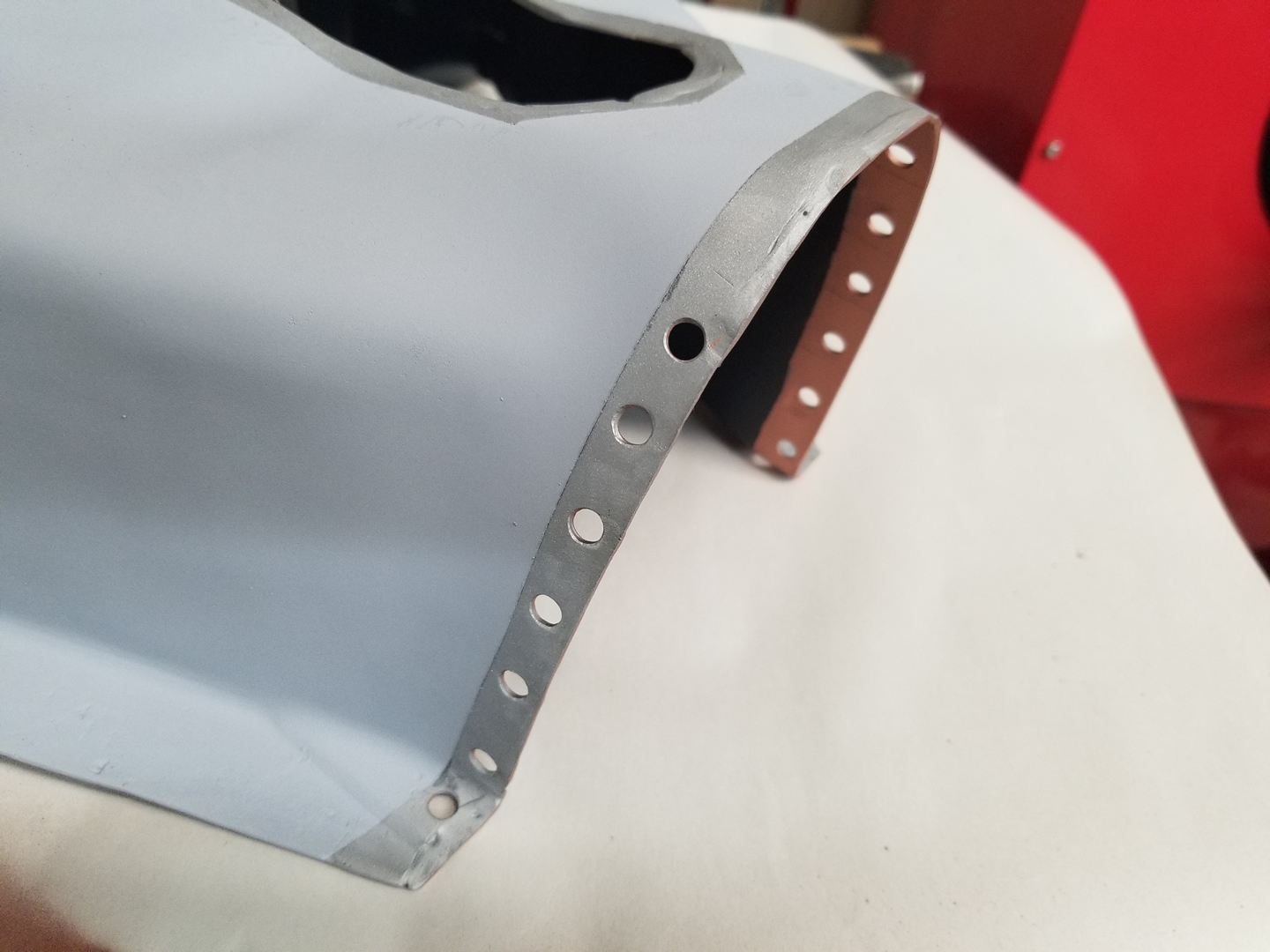
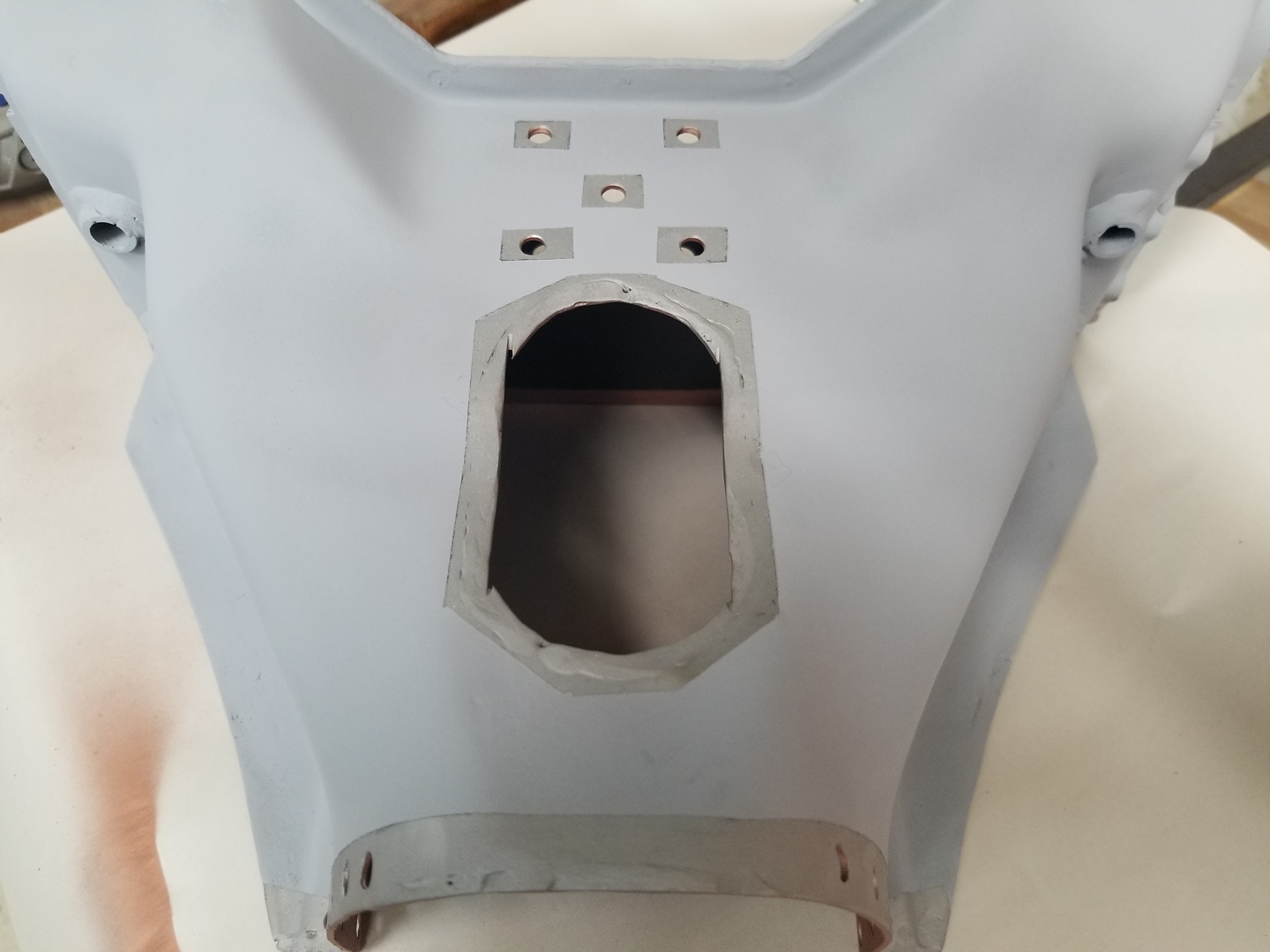
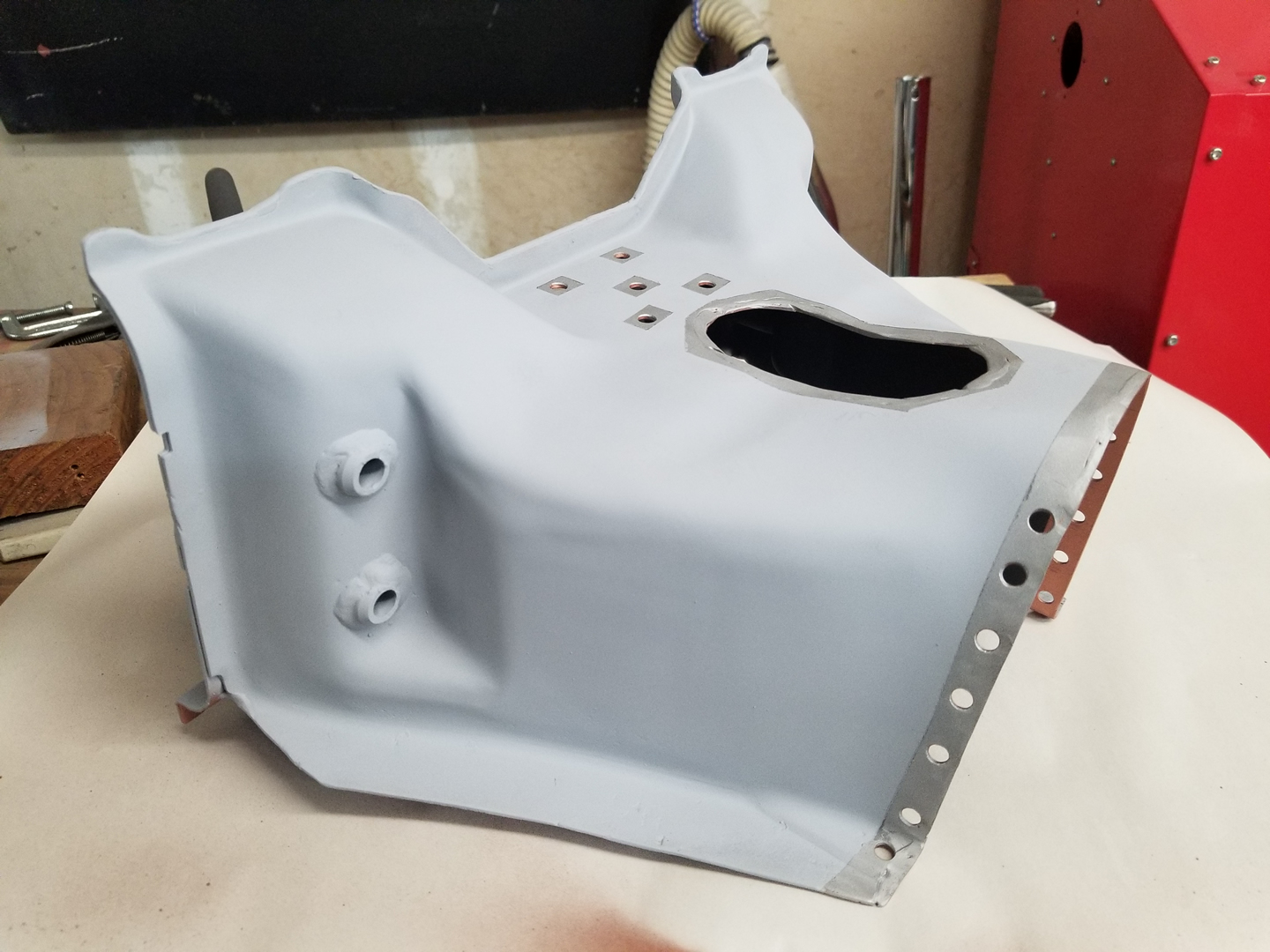
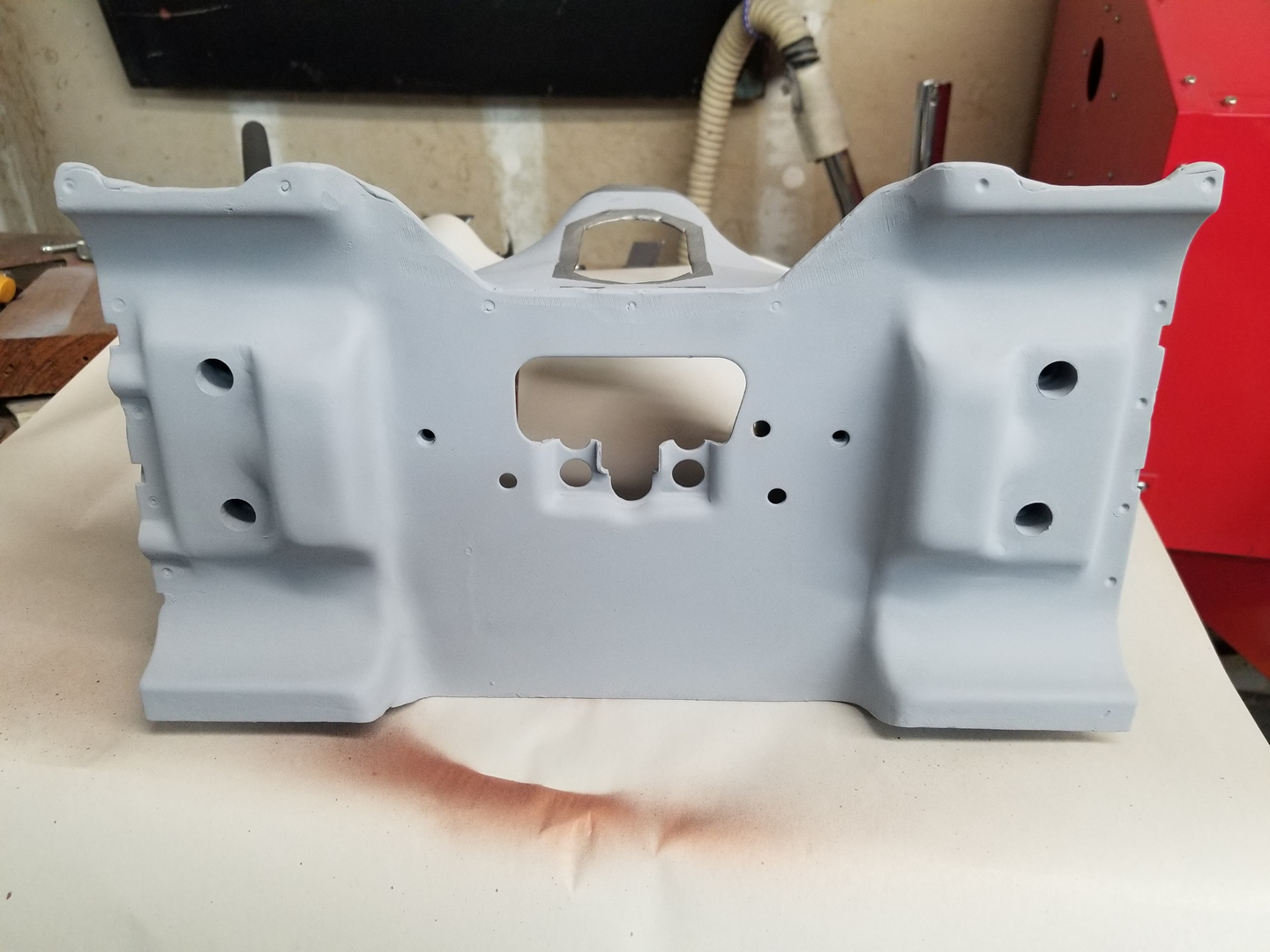
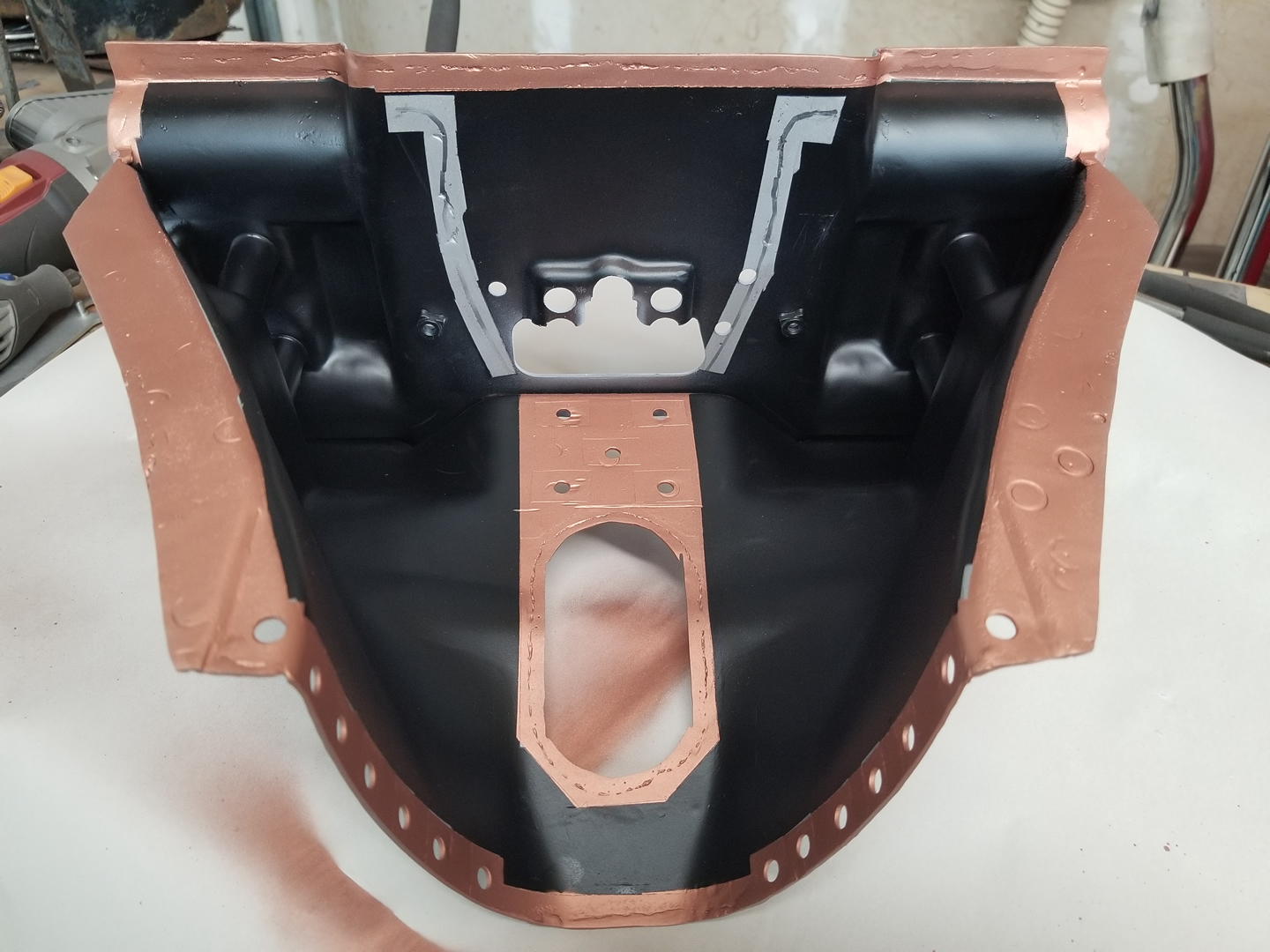
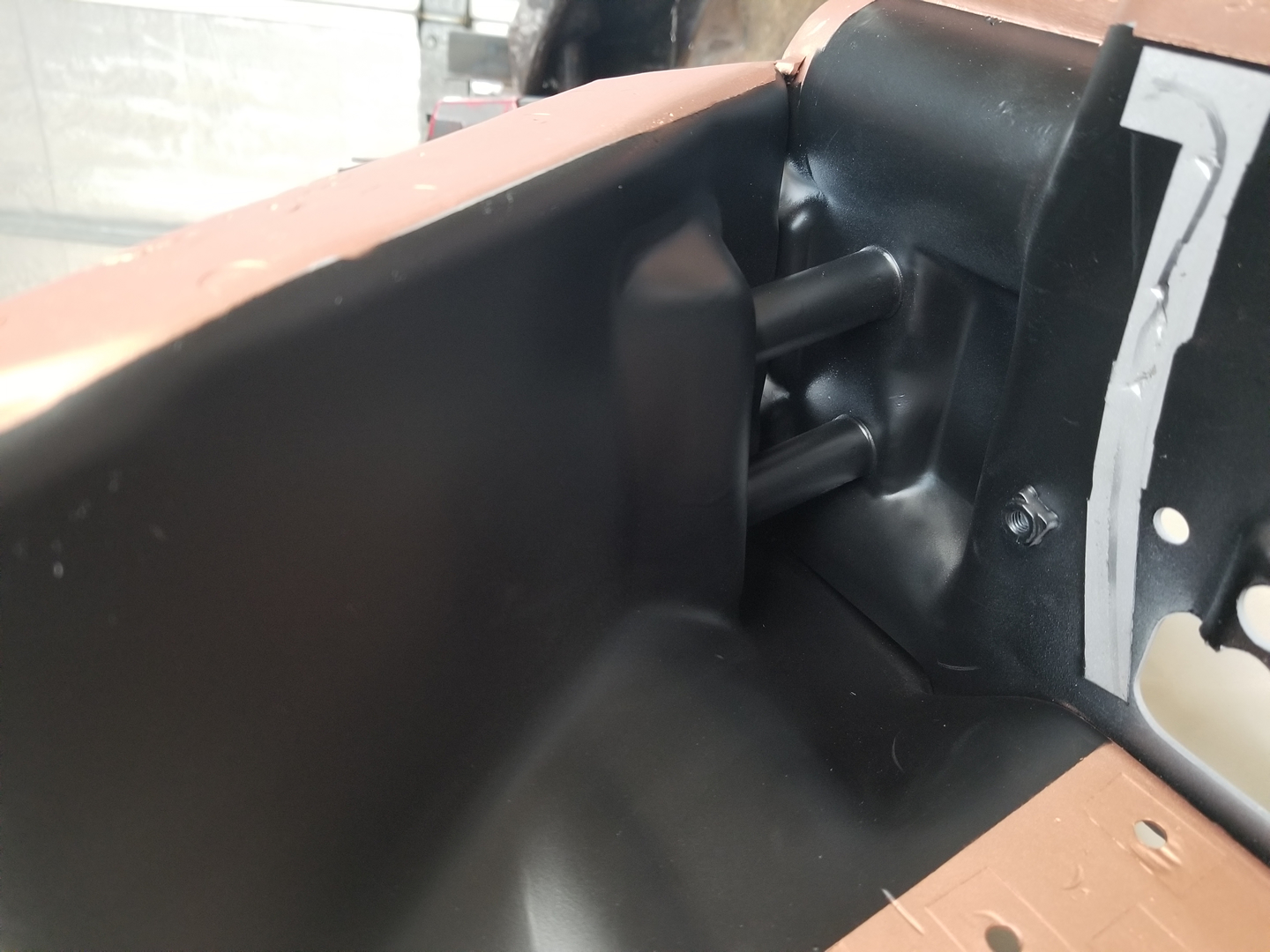
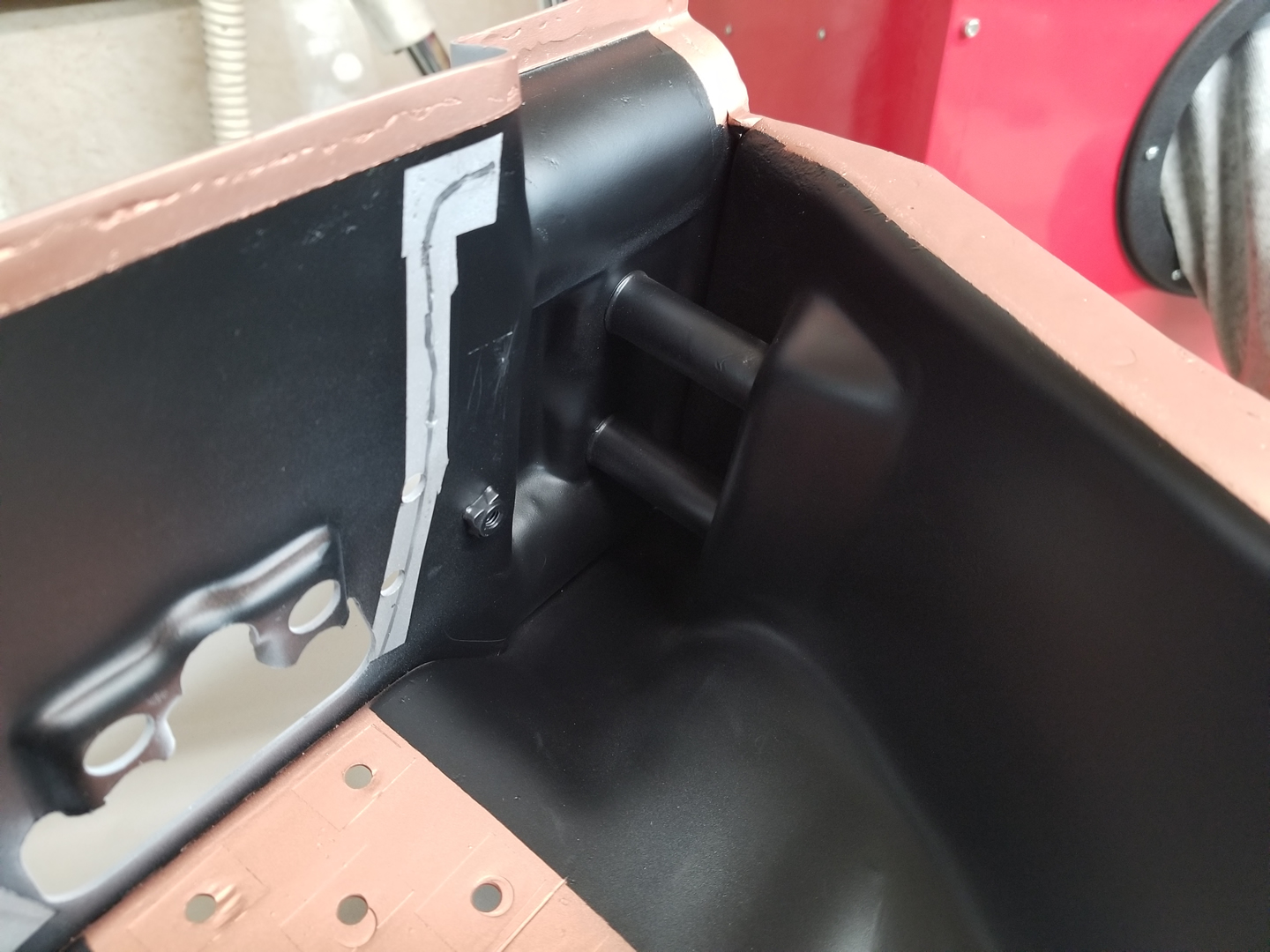
Next, I sandblasted the entire part, sprayed primer on the outside of it, masked off and sprayed U-POL Weld #2 Copper Weld Through Primer on the inside areas that are going to be welded, and sprayed Eastwood Matte Black Rust Encapsulator on all other areas on the inside that are not going to be welded.
|
|
|

|
|
|
|
|

|
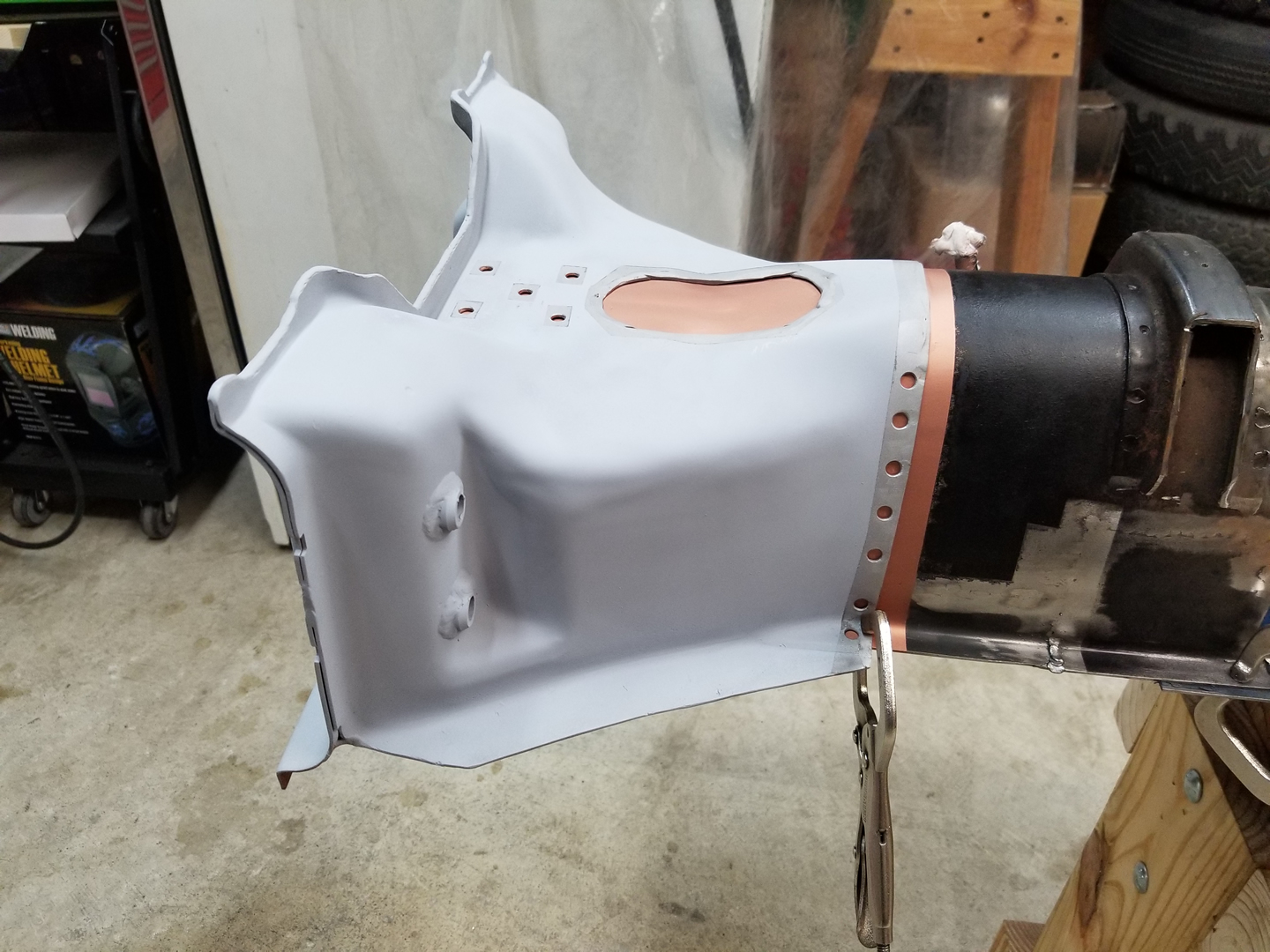
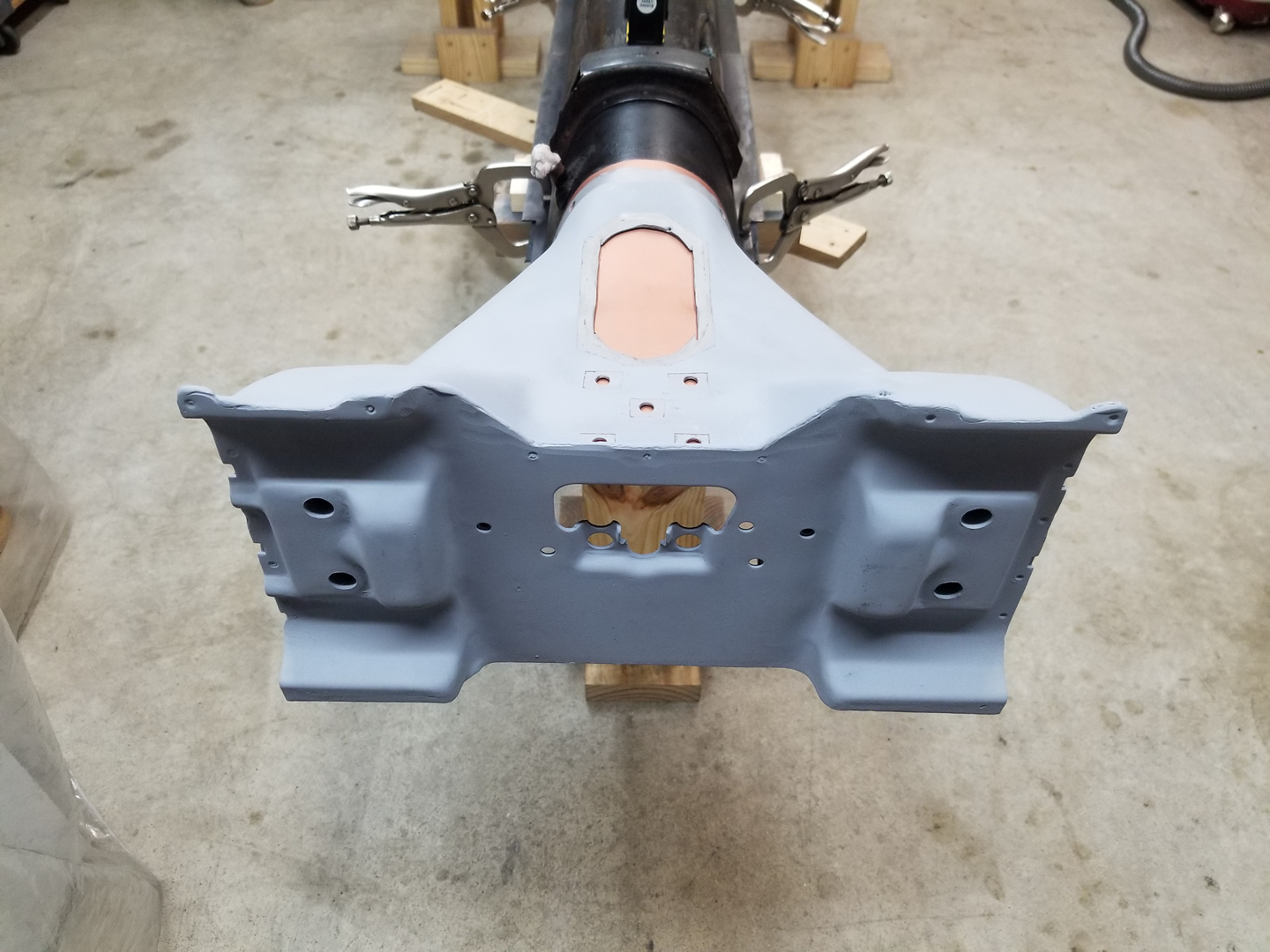
One final check of the fit before welding on.
|

|
|
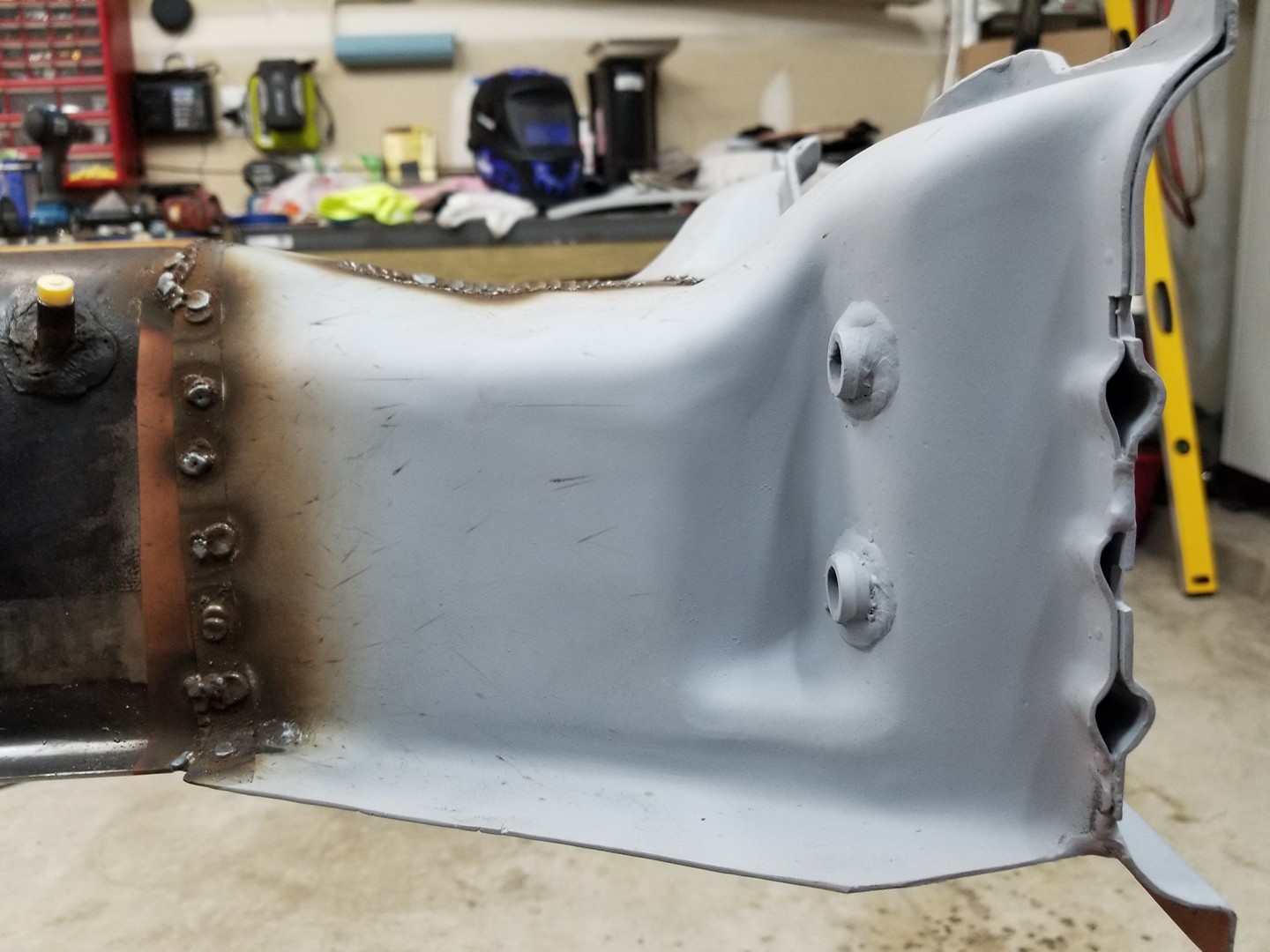
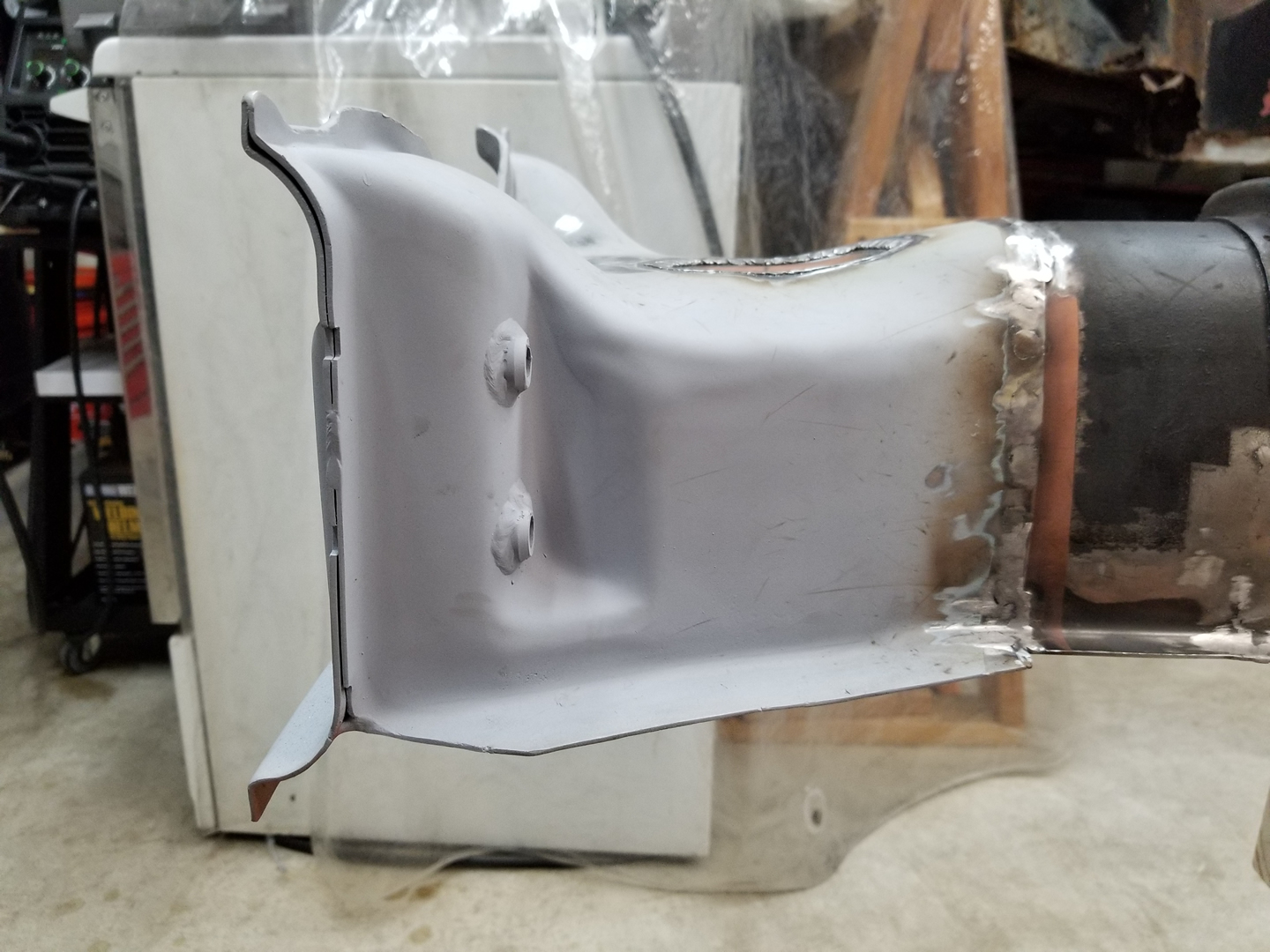
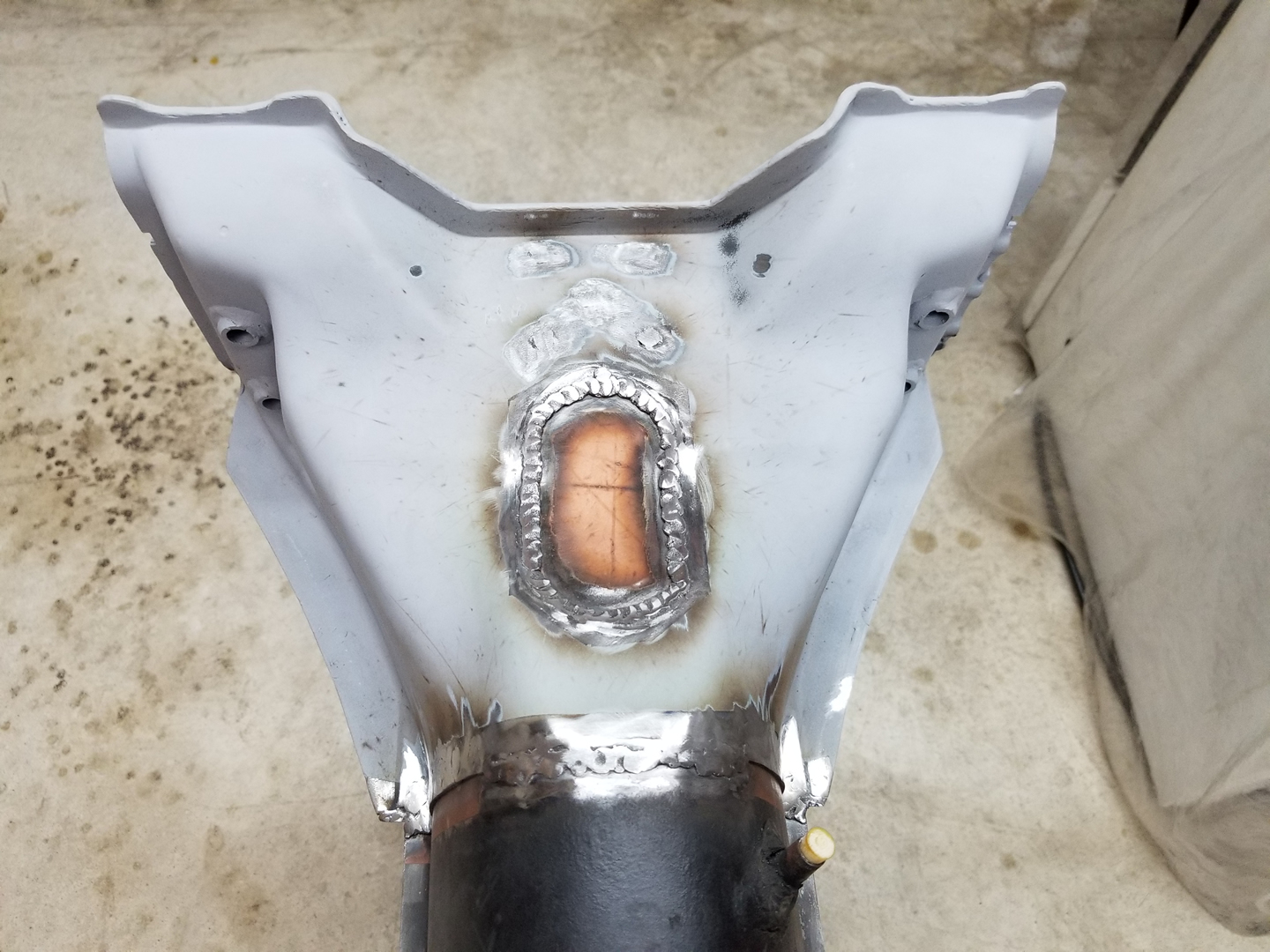
Welding time! I welded the donor frame head part on and dressed the welds. Most of them will be covered by seam sealer, so appearance isn't all that critical. After many years just thinking about how I has going to accomplish this, this part is finally done. If I can give one piece of advice to anyone out there doing a restoration - just get started and don't be afraid to make mistakes. You will likely make mistakes, but at least you are making progress. Half of the challenge is undoing what you've messed up. Progress beats procrastination every time.

|
|

|
|

|

|
|
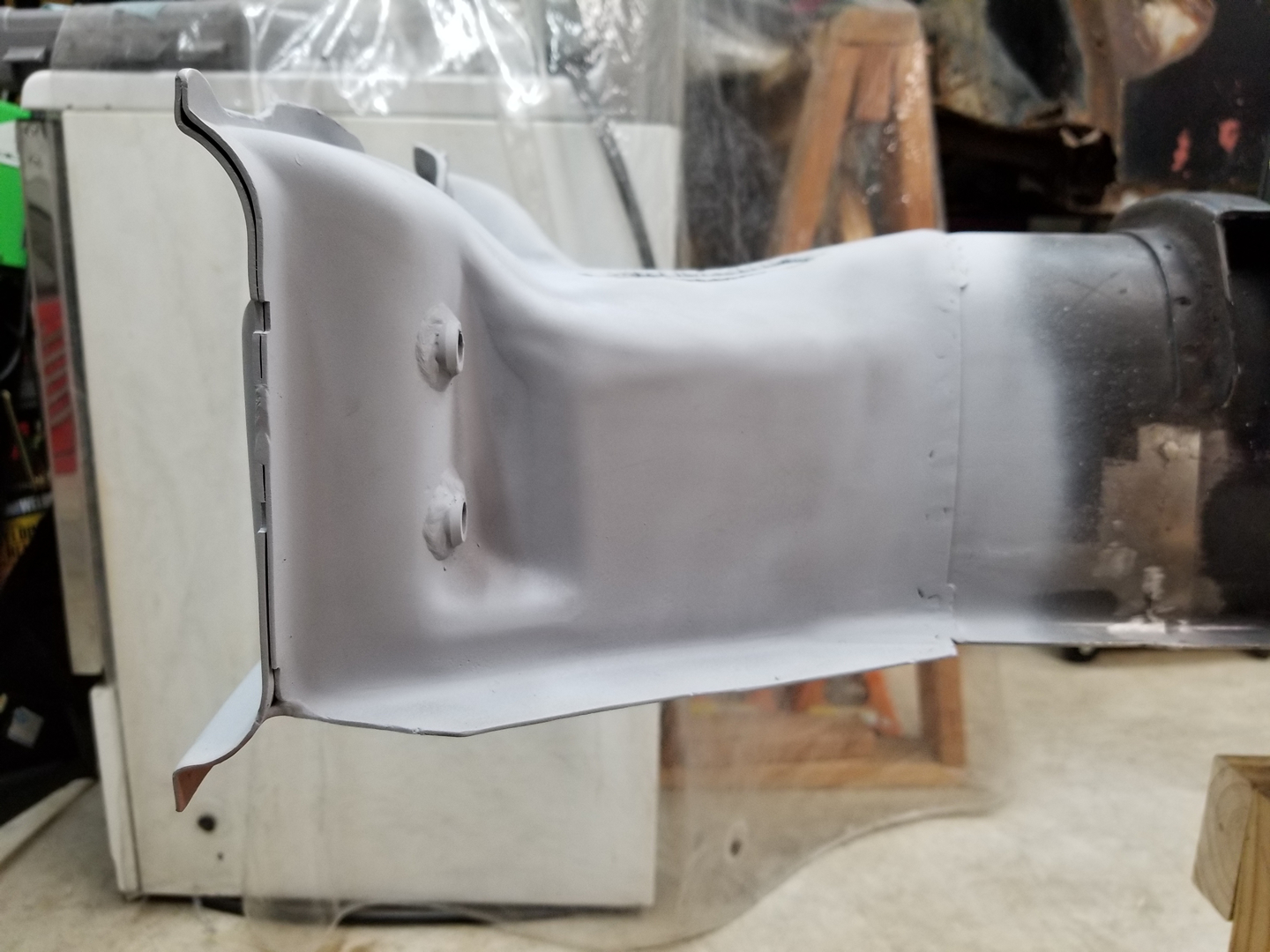
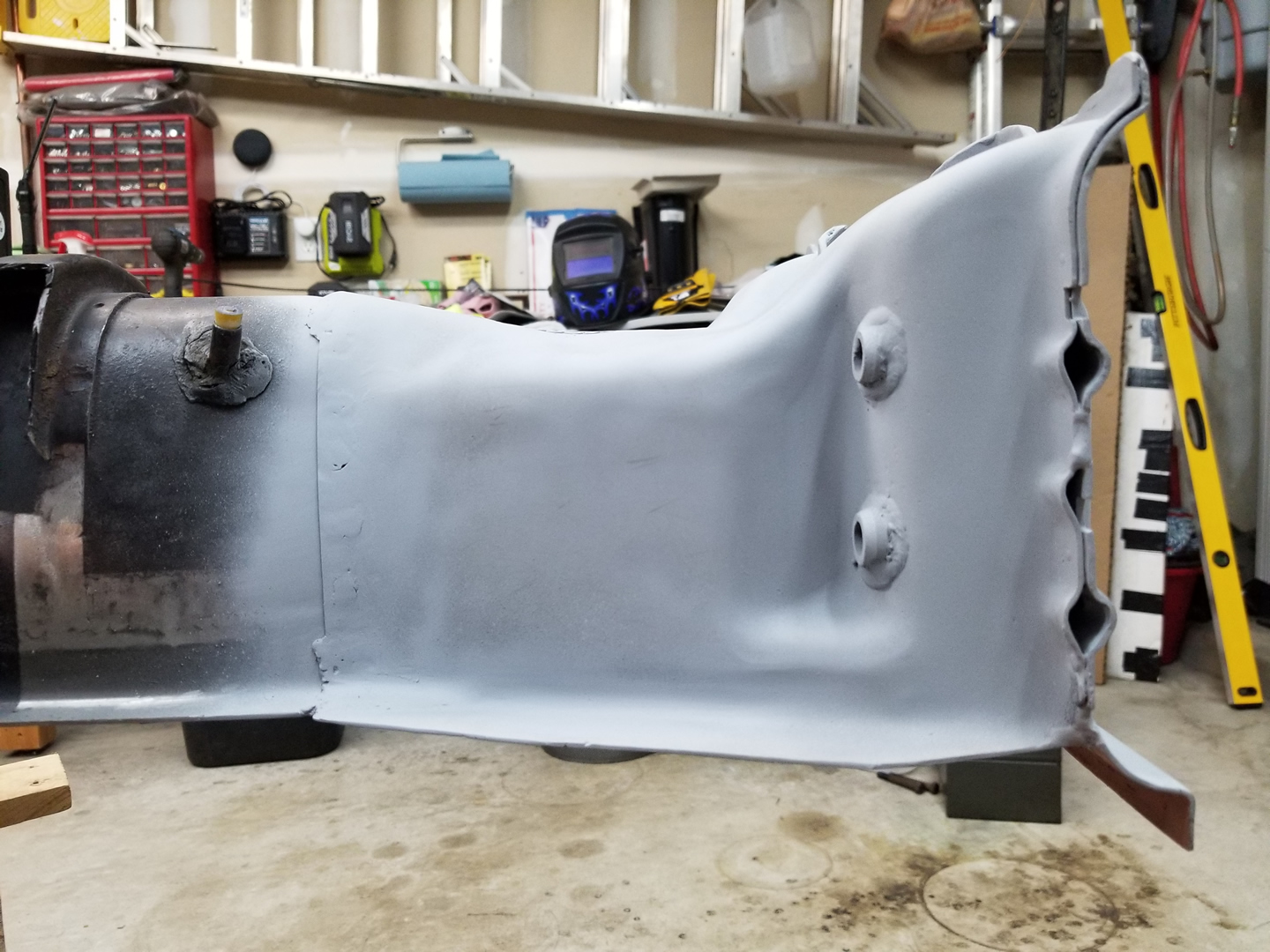
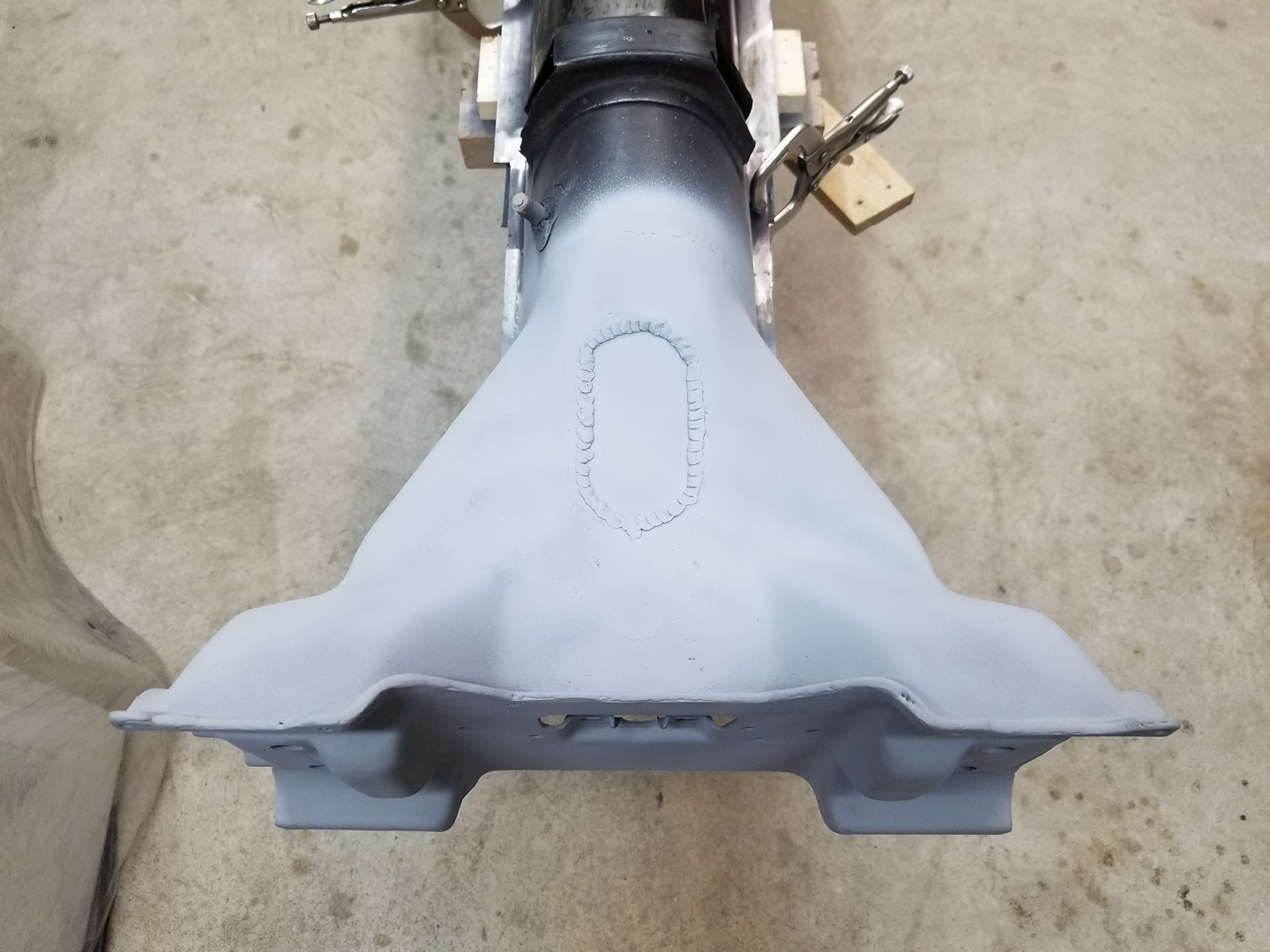
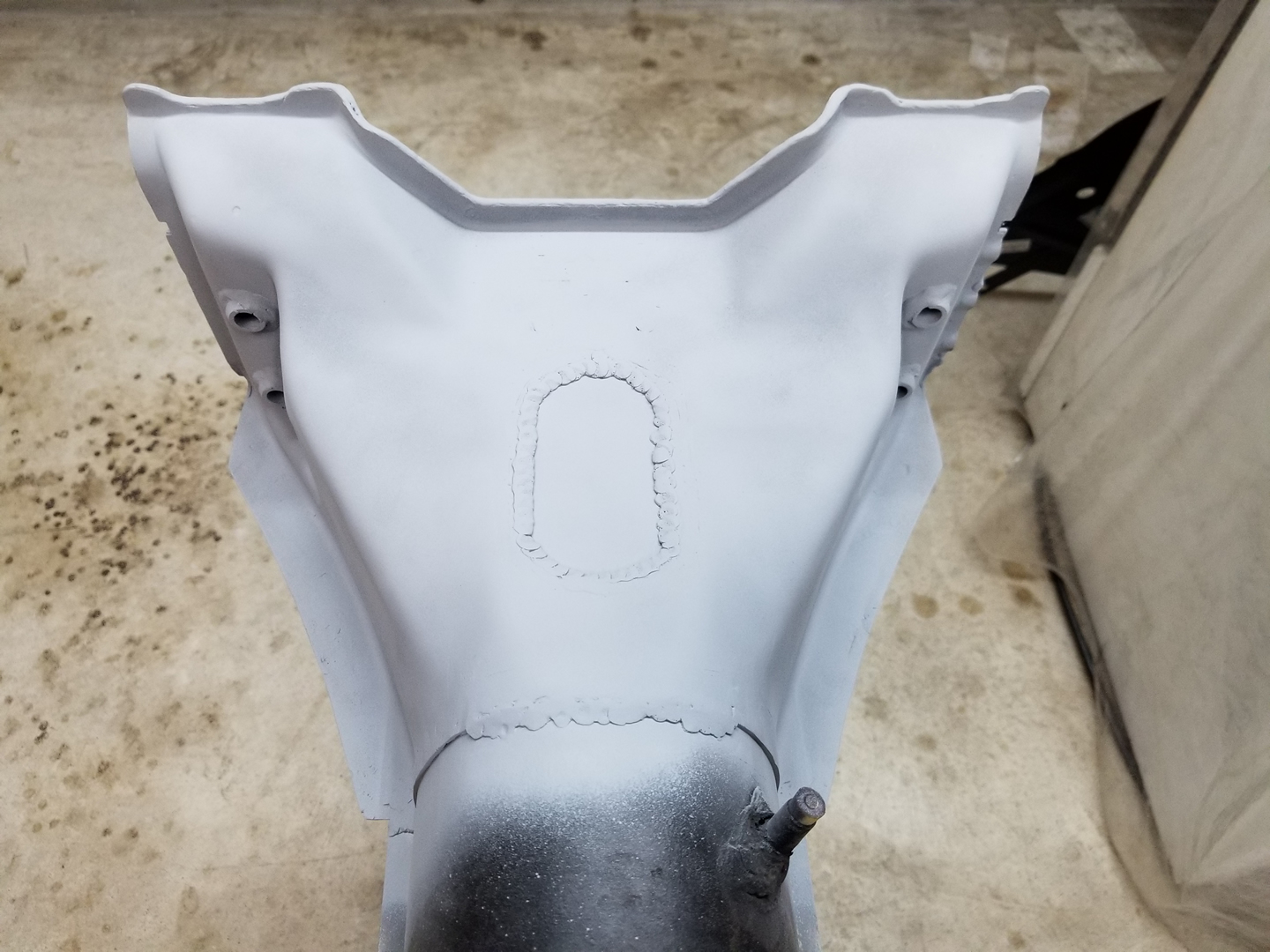
I sprayed some primer over the bare areas that were just welded to protect it until I start to prep for paint. Now it's time to flip it back over to install the new fuel line and to weld the bottom plates on the new frame head and the tunnel.
|
|
|
|
Fitting and Welding the Frame Head Bottom Plate
by Garage Weasel on May.08, 2024, under Chassis
The frame head bottom plate I am using for replacement is a Klokkerholm panel made to fit 1956-1965 Beetles. It is very different than the one on my car originally, but this is really the only available option. I purchased two donor frame head assemblies, and both the bottom plates were two rust-damaged to use. These are also very difficult to remove from donor pieces because of all the seam welds. The best option for me is to use this generic one and make it work. There are huge gaps in several places like where it fits over the end of the tunnel and where it fits against the front axel mounting plate.

|

|

|

|

|

|
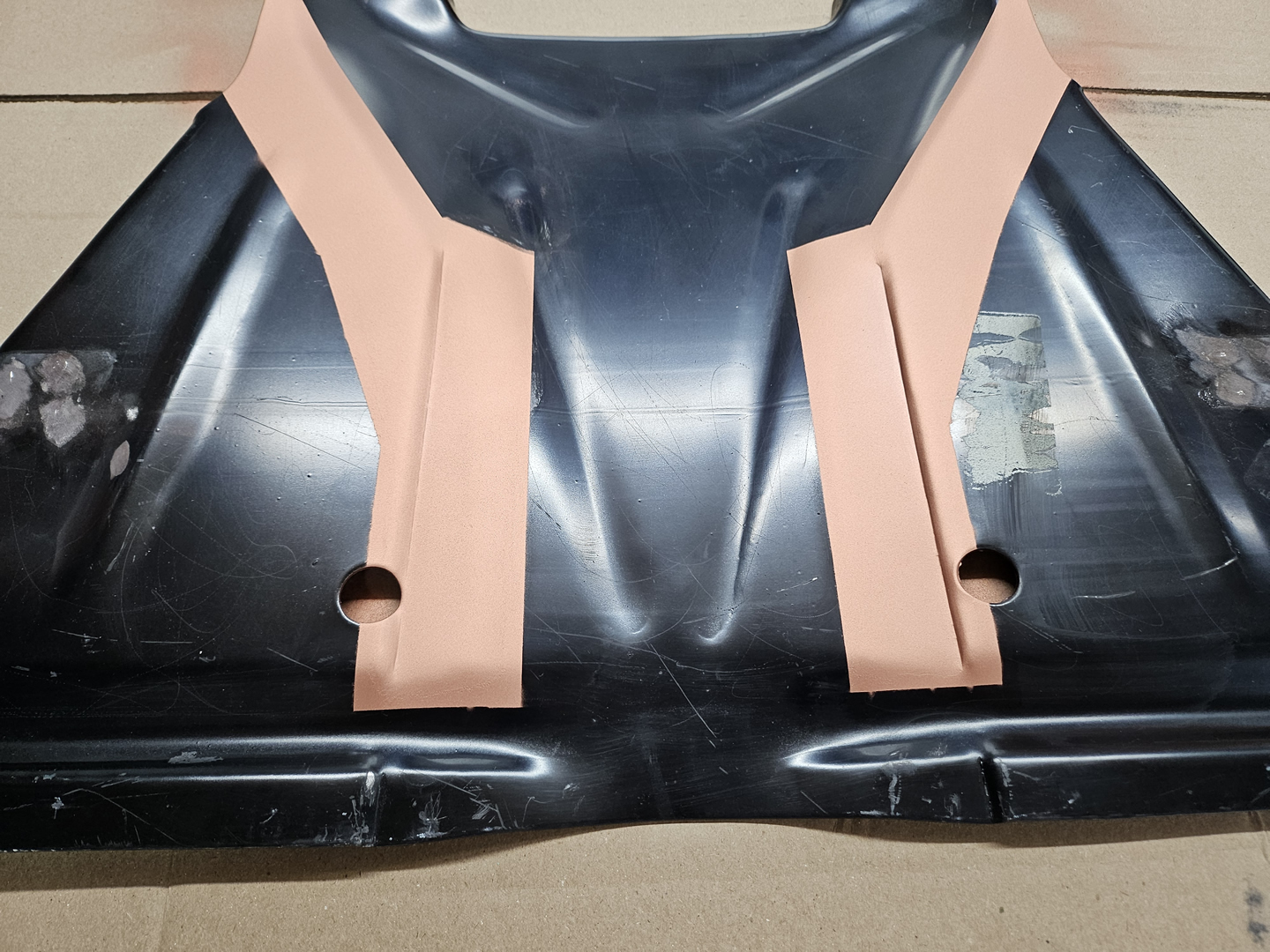
There is a 2-milimeter gap under the replacement plate between it and the tunnel rails. I decided to make spacers and weld them to the plate, so I removed the EDP protective coating sprayed on by the manufacturer and sprayed U-POL Weld #2 Copper Weld Through Primer on the areas to be welded.

|

|

|

|
|
I made the spacers and both spot-welded them to the bottom plate and seam welded them. It is overkill, for sure, but I want to have them firmly attached to the plate. After grinding down the welds, I sprayed them with the weld-through primer as well. I also sprayed weld-through primer on the end of the tunnel bottom plate where it will be welded to the frame head bottom plate.

|

|

|

|

|

|
The last steps before welding the plate on was to drill holes for the areas to be spot welded and to remove the primer on the outside of the frame head.

|

|

|
The replacement was initially bowed and didn't fit flat against the tunnel and was even more bowed after welding on the spacers. To flatten it and pull it down to the tunnel, I used some 2 x 4's and clamps. With this and some adjustable metal clamps I was able to get a close fit.

|

|

|
I started with the spot welds. I was somewhat successful and didn't make too much of a mess of them.

|

|
I flipped the chassis over and welded the areas where the bottom plate fits against the axel mounting plate and the tunnel bottom plate. These were all seam welds. My welding turned out messy, but I was able to get good coverage and penetration.

|

|

|

|

|
I first ground down the spot welds. Not a hard job but it took a while.

|

|
The seam welds on the bottom took hours to grind down due to my lack of welding skills. Lots of shaping and metal sculpting was required. In the end, I had acceptable results.

|

|

|

|
I re-welded the seam weld where the frame head bottom plate is attached to the tunnel bottom plate. The straight weld just didn't turn out very well and a bead weld should be a better weld visually and structurally. I will not ground this down very much as it will be covered with seam sealer and is fairly flat already.

|

|
The next step is fitting and welding the Napoleon hat!

-
Hi! Welcome to My Beetle Restoration!
Thanks for dropping by! Feel free to add comments (preferably positive and helpful ones). See you around!
